EN
EN


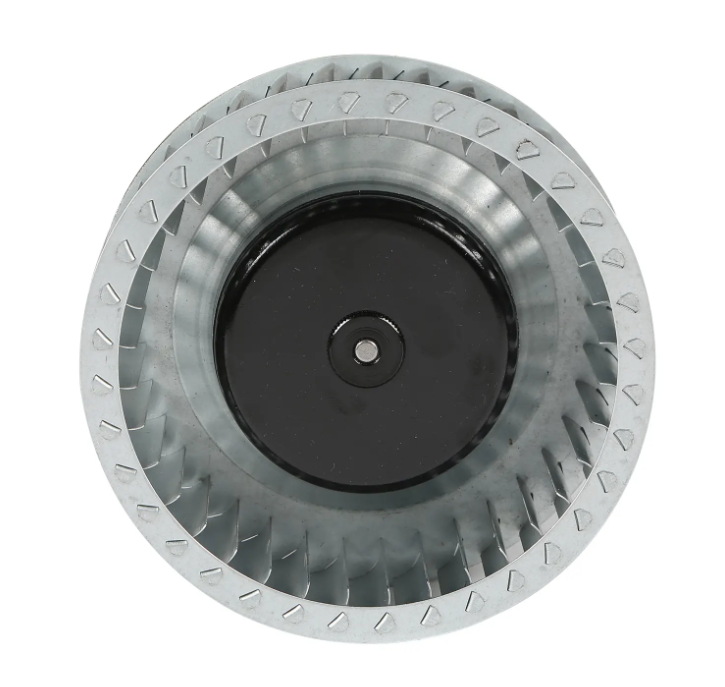
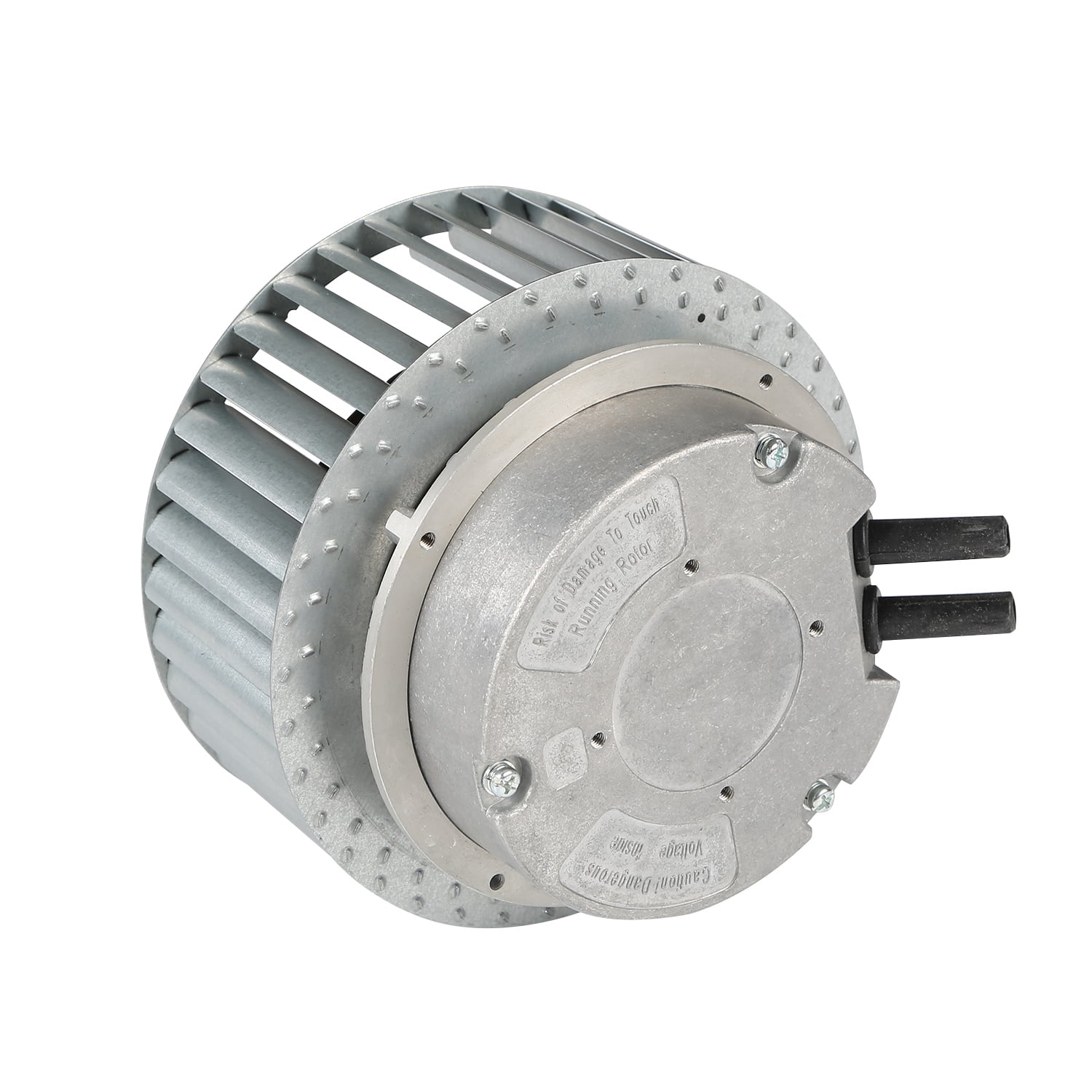
As a highly distinctive member of the centrifugal fan family, the forward centrifugal fan's core structural feature is that the bending direction of the blades is consistent with the rotation direction of the impeller. This differentiated design not only gives it unique performance advantages, but also makes it an irreplaceable choice in many specific application scenarios. In sharp contrast to the design of backward bending centrifugal fan blades, the structural layout of forward blades fundamentally determines their airflow driving mode and performance, laying the foundation for subsequent advantages such as high-pressure output and compact structure.
From the perspective of working principle, when the impeller of the current centrifugal fan starts to rotate under the drive of the motor, the blades bent in the same direction as the rotation direction will directly generate positive thrust on the air entering the fan. This pushing method is more direct and efficient, and can quickly drive the air to generate kinetic energy. Compared to the method of indirectly guiding the airflow radially out through centrifugal force in a backward fan, the blades of a forward fan have a larger interaction surface with the air and a more direct force. Therefore, under the same speed conditions and impeller diameter specifications, a forward fan can generate a higher maximum pressure than a backward fan. This core performance advantage makes it highly competitive in scenarios that require overcoming significant airflow resistance and achieving high-pressure air supply. With limited power input, it can transport air to pipeline systems at longer distances or higher resistance, meeting the core requirements of high-pressure ventilation.
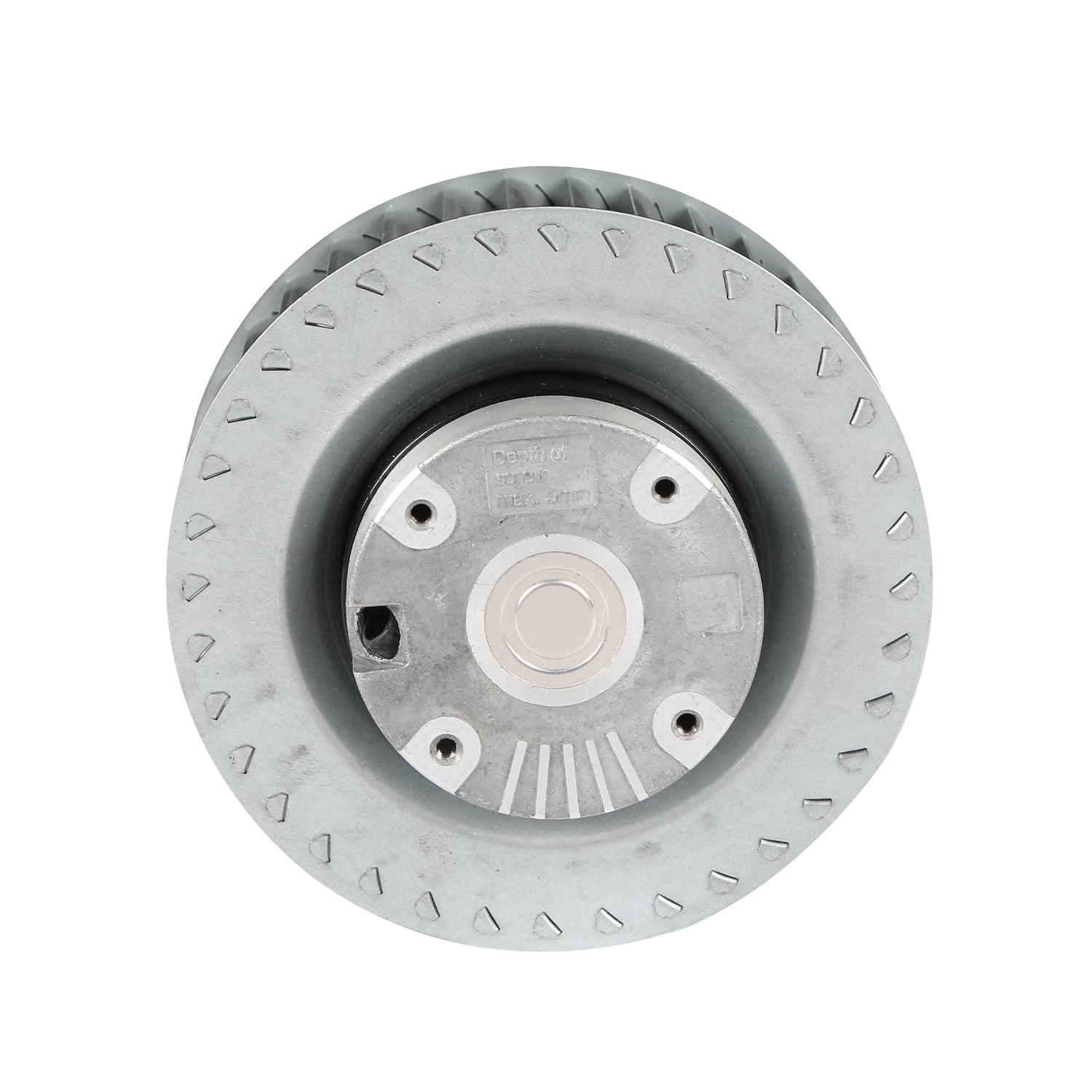
In terms of the structure and material design of the core components, the forward centrifugal fan exhibits distinct characteristics of economy and compactness. The blade design usually adopts a layout pattern of "multiple quantity, short size", with more blades compared to the backward fan, and the length of a single blade is relatively short. This design can further enhance the efficiency of the blades in pushing air and help reduce the overall volume of the impeller. The manufacturing process of blades is mostly thin plate stamping, which achieves uniform bending curvature and size specifications through precision mold processing. It not only has high production efficiency but also effectively controls manufacturing costs, making it suitable for large-scale mass production. The blade has a streamlined structure that bends forward as a whole. This shape design can better fit the airflow trajectory, reduce air slip on the blade surface, and minimize airflow loss while ensuring high pressure output.
Thanks to the compact design of the blades, the impeller structure of the forward centrifugal fan is more compact as a whole. Under the same air output requirements, its impeller diameter can be made smaller than that of the backward fan, which directly creates the advantage of the small size of the entire fan and allows it to flexibly adapt to installation environments with limited space. In terms of material selection, the forward centrifugal fan is mainly guided by economy and practicality, and commonly used materials include galvanized steel plate and plastic. Among them, the blades and impellers made of galvanized steel plate have good structural strength, corrosion resistance, and cost-effectiveness, which can meet the needs of most conventional industrial and civilian environments; Plastic materials are more lightweight, cost-effective, and resistant to chemical corrosion, making them suitable for ventilation scenarios with weak corrosiveness or compact equipment with strict weight requirements. The widespread application of two types of materials not only effectively controls the overall manufacturing cost of fans, but also broadens their applicability, allowing users with different budgets and usage scenarios to find suitable choices.
In terms of performance indicators, the rotor efficiency of forward centrifugal fans is usually maintained between 60% -75%. Compared to the high-efficiency level of 80% -90% of backward fans, although there is a certain gap, this efficiency performance can fully meet the needs of its target application scenarios. It should be clarified that the design core of forward leaning fans is not to pursue ultimate efficiency, but to achieve a balance between performance and practicality while ensuring high pressure, compact structure, and low cost. For many scenarios where efficiency requirements are not top of the line, but are more sensitive to pressure, volume, and cost, this level of efficiency can already meet practical usage needs, and combined with its outstanding high-pressure advantages and economic costs, it still has extremely high application value.
With its three core characteristics of high pressure, small size, and low cost, forward centrifugal fans are widely used in multiple highly targeted fields. In compact air conditioning equipment, whether it is household wall mounted air conditioners, cabinet air conditioners, commercial embedded air conditioners, or small central air conditioning units, the compact volume of the forward centrifugal fan allows it to be easily integrated into the limited space inside the equipment. At the same time, its high pressure performance can effectively promote the circulation of cold air in the air conditioning pipeline, achieving rapid adjustment of indoor temperature; In the field of low-pressure forced ventilation, such as local ventilation in small factory workshops, kitchen exhaust in civil buildings, basement ventilation, etc., forward fans can achieve forced ventilation at a certain pressure with low energy consumption, quickly exhaust polluted air, oil fume or moisture indoors, and ensure indoor air quality; In drying and drying equipment, such as small clothing dryers and industrial material small drying units, forward centrifugal fans can provide high-pressure airflow, accelerate the contact and flow of hot air with the material to be dried, improve drying efficiency, and shorten drying time; In addition, in clean gas transportation scenarios such as inert gas transportation in laboratories and clean air circulation in food processing workshops, the safety of the material and compact structure of the forward fan can meet the cleanliness requirements of gas transportation, while the high-pressure performance ensures the stability and reliability of gas transportation.
In addition to the core application areas mentioned above, forward centrifugal fans also play an important role in medical devices, small ventilation duct systems, equipment cooling and ventilation, and other scenarios. Its compact size makes it easy to integrate into various small devices, and its low-cost advantage reduces the manufacturing cost of the entire equipment. Its high pressure performance ensures the realization of the core functions of the equipment. Whether in the civilian or industrial fields, the forward centrifugal fan, with its unique performance combination, has become an ideal choice for applications that require pressure, space limitations, and cost sensitivity. It provides stable and reliable support for the normal operation and ventilation needs of various equipment, and occupies an important place in the ventilation equipment market.