 EN
EN

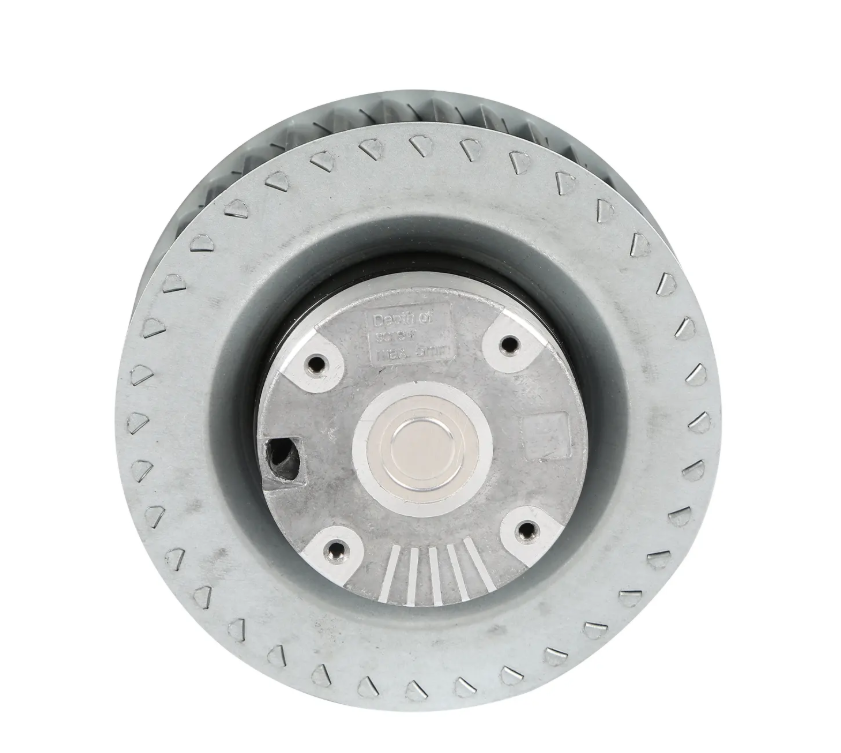
The Aerodynamic Advantage of the Blade Shape
The backward curved plug fan gets its name from the shape of its impeller blades. Unlike forward curved blades that scoop air and throw it forward, backward curved blades tilt away from the direction of rotation. This design does something clever with the physics of air movement. As the impeller spins, the curved profile guides air smoothly along the blade surface with minimal separation and turbulence. The result is efficient energy transfer from the motor to the airstream with less of the churning and swirling that wastes energy in less refined impeller designs. Because the blades work with the airflow rather than fighting it, a backward curved plug fan can reach efficiency levels that other centrifugal fan designs struggle to match.
A Stable Performance Curve That Engineers Trust
One characteristic that makes a backward curved plug fan stand out is its non overloading power curve. In a forward curved fan, as airflow increases the power drawn by the motor keeps climbing. If the system resistance drops unexpectedly, say a damper opens wide or a filter gets removed, the motor can overload and trip. A backward curved plug fan behaves differently. Its power curve rises to a peak and then actually declines at higher airflow rates. This means the motor will not overload even if the fan operates with very low system resistance. For system designers, this built in protection simplifies motor sizing and adds a layer of safety against unexpected operating conditions. The stable performance curve also means the fan delivers predictable airflow across a wide range of static pressures, which matters in systems where conditions change during operation.
Plug Fan Design Eliminates Belt Losses
The "plug" part of the backward curved plug fan refers to the mounting configuration. The impeller mounts directly onto the motor shaft with no belts, pulleys, or intermediate bearings. The motor itself is integrated into the fan assembly, often mounted within the inlet cone. This direct drive arrangement eliminates the transmission losses that belt driven fan systems suffer. Belts slip, stretch, wear out, and need tensioning. Each of those maintenance points introduces downtime and efficiency loss. A direct drive backward curved plug fan delivers the motor's output power to the impeller with near perfect transfer. Fewer moving parts also means less maintenance and fewer things that can go wrong during years of continuous operation.
Compact Installation Inside Air Handling Units
The backward curved plug fan really shines in air handling unit and plenum fan applications. Because the design does not require a scroll housing, the fan assembly can mount directly inside the AHU cabinet. Air discharges from the impeller into the surrounding plenum, which pressurizes and feeds the downstream ductwork. This compact arrangement saves a significant amount of space compared to traditional housed centrifugal fans that need a scroll casing and separate motor mounting. The open discharge also makes access for cleaning and maintenance easier. Technicians can reach the impeller, motor, and surrounding cabinet without disassembling a scroll housing. For air handling units in tight mechanical rooms, this space saving design simplifies installation and service.
Efficiency That Holds Up Over Time
The steady performance reputation of the backward curved plug fan is not just about the initial specifications. It is about how the fan behaves over years of operation in the field. The aerodynamic impeller design resists fouling better than forward curved blades because dust and debris have fewer crevices to accumulate in. The direct drive system does not develop the belt slippage that gradually reduces performance in belt driven fans. The non overloading power curve continues protecting the motor long after commissioning. These factors combine to keep the fan performing close to its original efficiency curve well into its service life, which is what "steady performance" really means in practice.
A backward curved plug fan delivers the kind of reliable, predictable airflow that engineers and facility managers value. The blade geometry, the direct drive configuration, the compact form factor, and the non overloading characteristics all work together to create a fan that handles real world conditions without drama.