 EN
EN

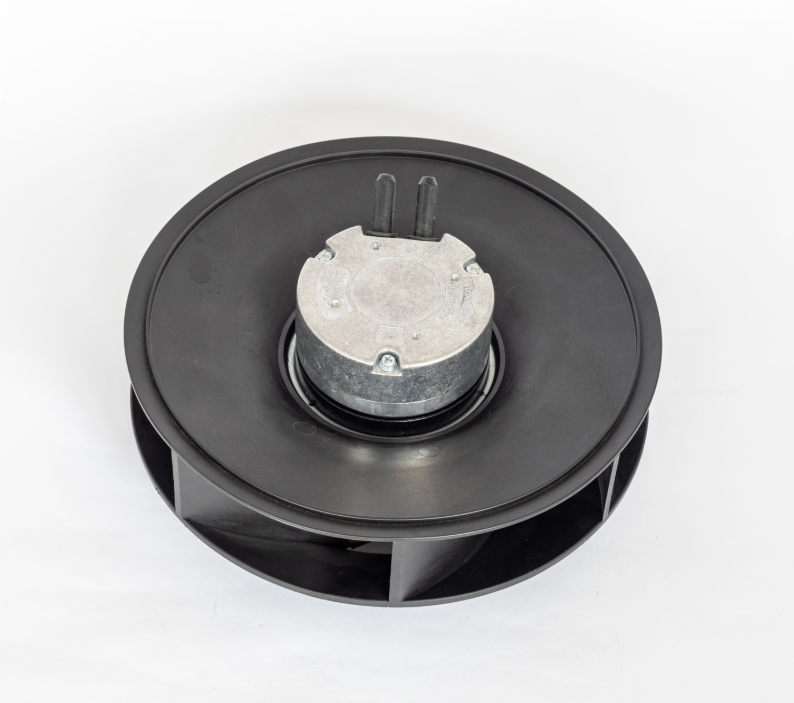
If you have ever stood next to an older air handling unit while it was running, you know the sound. That low, rumbling groan mixed with the high pitched whine of belts slipping under load. It is the soundtrack of inefficiency. For decades, that was just the price of doing business in commercial HVAC. You accepted the energy bills and the maintenance headaches because that was how things worked. But the industry has been quietly going through a transformation, and at the center of that shift is a piece of equipment that does not look particularly glamorous but changes everything about how air moves through a building. That piece of equipment is the ahu plug fan.
Here is the thing about traditional belt driven fans. They have a lot of moving parts that have nothing to do with moving air. You have belts that stretch and wear out. You have pulleys that need alignment. You have bearings that need grease and eventually replacement. Every single one of those components is a point of energy loss and a potential point of failure. A plug fan takes a fundamentally different approach. Instead of a motor sitting off to the side, transferring power through a rubber belt, the motor is directly connected to the impeller. There is no belt to slip, no pulley to misalign, and no transmission loss eating away at efficiency. It is a simpler, cleaner way to get the job done.
The Direct Drive Difference
The core advantage of a plug fan comes down to one simple design choice. The impeller is mounted directly onto the motor shaft. That might not sound revolutionary, but the ripple effects of that decision touch every aspect of system performance. When you eliminate the belt and pulley system, you instantly remove a significant source of mechanical loss. Belt drives are inherently inefficient. Somewhere between five and fifteen percent of the energy going into that motor never makes it to the fan blades. It is lost as heat, friction, and noise.
A direct drive ahu plug fan bypasses all of that waste. The energy from the motor goes straight into the rotation of the backward curved impeller. This means that for the same amount of airflow, a plug fan simply requires less electricity. Over the course of a year, especially in systems that run around the clock, that efficiency gap adds up to real money. It also translates to less heat being dumped into the air stream, which means the cooling coils do not have to work as hard to remove that extra thermal load. It is a virtuous cycle where efficiency in one component cascades into better performance across the entire air handling unit.
Rethinking the Footprint Inside the AHU
Space inside an air handling unit is always at a premium. Engineers are constantly trying to pack more coils, better filtration, and more sophisticated controls into the same box. Traditional housed fans take up a lot of real estate. They have a bulky scroll casing that directs the airflow, and the motor sits off to the side, requiring even more width or length. This can force the entire AHU to be larger than it needs to be, which drives up material costs and makes installation in tight mechanical rooms a nightmare.
An ahu plug fan flips this script entirely. Because there is no scroll housing, the fan discharges air freely into the plenum of the AHU. The motor is tucked neatly behind the impeller, creating an incredibly compact package. This allows manufacturers to shrink the overall size of the air handling unit without sacrificing performance. A smaller AHU is lighter, easier to rig into place, and can fit into mechanical spaces that would never accommodate a traditional unit of the same capacity. For retrofit projects in older buildings where the mechanical room was designed around equipment from fifty years ago, this space saving capability is often the difference between a feasible upgrade and a non starter.
The Marriage of Plug Fans and EC Motor Technology
The plug fan concept has been around for a while, but it truly came into its own with the widespread adoption of EC motor technology. Older plug fans sometimes used standard AC motors with external variable frequency drives. That setup still had the direct drive efficiency advantage, but the control side was a bit clunky. Modern ahu plug fan designs pair the backward curved impeller with an electronically commutated motor that has the drive electronics built right into the motor housing.
This combination is remarkably efficient. EC motors can achieve efficiency ratings above ninety percent across a wide range of operating speeds. Unlike AC motors that lose efficiency dramatically at lower speeds, an EC motor maintains its performance even when it is running at partial load. Since air handling units spend the vast majority of their operating hours at part load conditions, this is a huge deal. The fan can ramp down when the building does not need full airflow, and it does so without sacrificing electrical efficiency. That means the energy savings are not just theoretical peak numbers. They show up on the utility bill month after month.
Lower Maintenance as an Efficiency Multiplier
Efficiency is not just about kilowatts. It is also about labor hours, downtime, and the hidden costs of keeping equipment running. Belt driven fans demand regular attention. Belts need to be checked for tension and replaced when they show signs of wear. Pulleys need to be aligned properly, or the belts will wear unevenly and fail prematurely. Bearings need lubrication, and eventually the entire bearing assembly needs to be swapped out. All of this maintenance requires skilled technicians and scheduled downtime.
An ahu plug fan dramatically reduces this maintenance burden. There are no belts to replace. There are no pulleys to align. The direct drive design has far fewer moving parts that can wear out or break. For facility managers who are already stretched thin trying to keep aging buildings comfortable, this is a gift. It means fewer emergency calls when a belt snaps in the middle of a heat wave. It means less time spent on preventive maintenance tasks that take technicians away from other priorities. And it means a longer service life for the equipment overall. This reduction in maintenance is its own form of efficiency, freeing up resources that can be directed toward other building improvements.
Redundancy Through Fan Arrays
One of the most compelling applications of plug fan technology is the fan array or fan wall configuration. In a traditional AHU, a single large fan handles the entire airflow requirement. If that fan fails, the unit is down. There is no partial operation, no graceful degradation. The building loses ventilation until repairs can be made. That is a single point of failure that can have serious consequences in critical environments like hospitals, data centers, or pharmaceutical manufacturing facilities.
Because ahu plug fans are compact and modular, multiple smaller fans can be arranged in an array to meet the same total airflow requirement. This creates inherent redundancy. If one fan in the array fails, the remaining fans can ramp up their speed slightly to compensate for the lost airflow. The system stays online while maintenance is scheduled at a convenient time. This is not just about reliability. It is also about operational flexibility. A fan array can be staged so that only the necessary number of fans are running to meet current demand. This improves part load efficiency even further and extends the service life of each individual fan since they share the workload rather than one unit bearing the full brunt of continuous operation.
Real World Results That Speak for Themselves
The theoretical advantages of plug fans are nice, but the real proof is in the field. Retrofit projects across the commercial building sector have documented substantial energy savings when belt driven fans are replaced with ahu plug fan arrays. Energy reductions of twenty five to forty percent are not uncommon, and in some cases savings have exceeded fifty percent depending on the operating profile of the building. These numbers translate to payback periods that make financial sense, often in the range of two to five years.
Beyond the energy numbers, building occupants notice the difference in comfort. Plug fans with EC motors provide smoother, more precise airflow control. The fan array configuration also tends to produce more uniform airflow across the face of the coils and filters, which improves heat transfer efficiency and reduces the likelihood of hot or cold spots in the occupied space. And because the fans operate at lower sound levels, the background hum of the ventilation system fades into something you barely notice. It is the kind of improvement that does not make headlines but makes a building a better place to work or live.
Choosing the Right Partner for the Transition
Making the switch from traditional fans to a high efficiency ahu plug fan solution is a smart move, but it requires working with a partner who understands the engineering details. The fan selection must be matched to the specific static pressure requirements of the system. The motor controls need to be integrated properly with the building management system. And the physical installation, whether in a new unit or as a retrofit, requires careful planning to ensure everything fits and performs as expected.
The best outcomes happen when the fan supplier works collaboratively with the design team or facility manager to dial in the exact specifications. This is not a one size fits all situation. Different impeller sizes, motor power ratings, and control protocols all play a role in getting the best possible result. A partner who can provide accurate performance data, including wind tunnel test results and noise measurements, gives the design team confidence that the system will deliver on its promises. That level of transparency and technical support is what separates a simple component supplier from a true partner in building performance. When you get those details right, the ahu plug fan becomes not just a more efficient way to move air but a foundation for a smarter, more resilient building.