 EN

Overcoming Parasitic Heat Inside High-Density Enclosures
Packaged electronics inside modern control panels, telecom rectifiers, and power distribution racks generate concentrated thermal loads within tight sheet-metal footprints. When specifying an ec fan for cooling cabinet layouts, electrical engineers look beyond simple cubic-feet-per-minute ratings and focus on the motor's own waste heat signature. Traditional alternating-current shaded-pole or capacitor-run induction fans suffer from severe copper and iron rotor losses. Because an induction rotor relies on slip currents to generate torque, the central motor hub runs hot even under light static loads. When an installer mounts an AC axial or centrifugal unit at the bottom intake of an enclosure, the air entering the cabinet picks up heat directly from the scorching motor housing before it ever reaches the programmable logic controllers or variable frequency drives above. Electronically commutated motors eliminate this parasitic heating loop by using permanent magnets inside an external rotor hub paired with onboard microprocessor switching. Without rotor slip losses, the motor body stays remarkably cool to the touch, ensuring that ambient intake air retains its full thermal absorption capacity as it sweeps across sensitive circuit boards and aluminum heat sinks.
Closed-Loop Speed Modulation and Filter Loading Compensation
Industrial and commercial enclosures rarely dissipate the exact same thermal wattage twenty-four hours a day. An automated packaging line or medical imaging rack might idle at low power overnight before ramping up to full current draw during afternoon shifts. Running fixed-speed cooling blowers at maximum revolutions per minute around the clock wastes electricity, creates annoying control-room noise, and pulls unnecessary shop-floor dust into the intake louvers. Integrating intelligent brushless blowers transforms enclosure thermal management through three operational mechanisms:
-
Stepless speed modulation via PWM or 0 to 10V analog signals: Onboard electronics connect directly to cabinet thermostats or PLC outputs, scaling impeller speed smoothly in proportion to internal temperature readings.
-
Cubic power savings under the Fan Affinity Laws: Because shaft power scales with the cube of rotational speed, dropping fan speed during partial-load hours cuts electrical consumption dramatically while extending ball bearing grease life.
-
Closed-loop tachometer feedback and stall alarms: Integrated Hall-effect sensors monitor exact shaft rotation and send immediate fault signals to the building management panel if a foreign object jams an impeller blade.
According to ISO 12759 efficiency classifications for fans and IEC 61800-3 electromagnetic compatibility standards for power drive systems, electronically commutated assemblies maintain high system efficiency across partial-load operating points without injecting disruptive harmonic noise onto sensitive control buses.
Performance Comparison Across Cabinet Cooling Technologies
Selecting the optimal thermal management hardware requires weighing static pressure capability against control flexibility, parasitic motor heat, and maintenance intervals.
| Cooling Hardware Category | Speed Control Method | Motor Self-Heating Profile | Static Pressure Across Louver Filters | Typical Cabinet Application |
|---|---|---|---|---|
| Shaded-Pole AC Axial Fan | Fixed speed or bulky external transformer | High rotor slip heat added to airstream | Low, airflow stalls as filter pads clog | Basic electrical junction boxes, low-density relays |
| Capacitor-Run AC Centrifugal | Step-voltage tapping with limited range | Moderate to high housing temperature | Moderate, fixed curve regardless of load | Legacy industrial switchgear, static power panels |
| EC Axial Cooling Fan | Built-in 0 to 10V or PWM stepless input | Minimal heat generation across motor hub | Moderate, best for high-volume free air | Server racks, telecom enclosures, medical consoles |
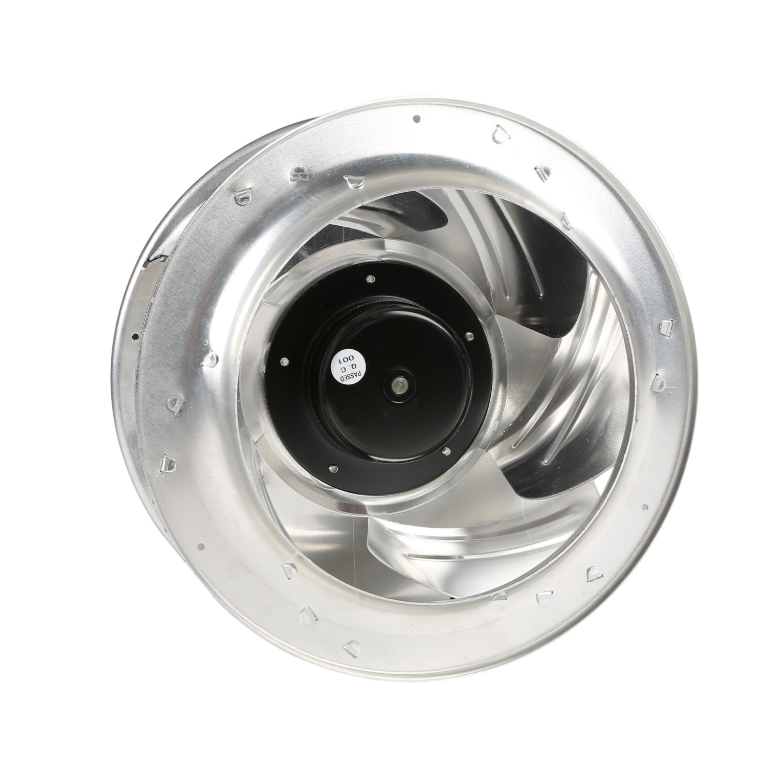
| EC Backward-Curved Centrifugal | Integrated closed-loop speed modulation | Cool operation with airstream-cooled electronics | High pressure, pushes through dense filter mats | VFD cabinets, battery energy storage, cleanroom controls |
The comparative data above highlights an important engineering trade-off: while EC axial fans move large volumes of air through open perforated server doors, tightly sealed industrial cabinets equipped with pleated dust filters require backward-curved EC centrifugal impellers to overcome static impedance.
Field Lessons from a Texas Solar Inverter Enclosure Retrofit
Ignoring filter pressure drop and ambient temperature swings can shut down automated infrastructure when operators least expect it. During a summer reliability audit at a commercial solar and battery storage facility in western Texas, maintenance technicians faced repeated afternoon thermal derating alarms across twenty outdoor inverter cabinets. The enclosures originally relied on fixed-speed AC axial filter fans mounted on the lower doors. Over several weeks of dry, windy weather, fine desert silt packed into the intake filter mats, doubling the static resistance across the louvers. Because standard axial blades cannot build high static pressure, actual airflow inside the cabinets plummeted while the overloaded AC motors radiated extra heat directly below the inverter heatsinks. Furthermore, running the fans at full speed during cool desert nights pulled morning condensation into the enclosures. Retrofitting the cabinet doors with backward-curved EC centrifugal filter blowers connected to internal temperature and humidity sensors solved both issues. Whenever afternoon cabinet temperatures climbed or filter resistance rose, the 0 to 10V control loop ramped up impeller torque to maintain positive internal pressure; at night, the fans idled down to a gentle trickle, keeping dust and moisture out of the electronics.
Aerodynamic Impeller Materials and Sourcing Reliable Fan Solutions
Of course, electronic motor control is not a magic bullet if the physical impeller geometry or housing plastic degrades under stress. In extreme high-temperature furnaces where ambient air exceeds the thermal limits of onboard circuit boards, external motor configurations remain necessary. For standard industrial machinery, HVAC control panels, transportation signaling racks, and home appliance electronics, pairing glass-fiber-reinforced plastic impellers with precision brushless motors eliminates blade warping and dynamic imbalance.
For enclosure manufacturers, automation systems integrators, and OEM equipment designers seeking dependable thermal management hardware, Fanova combines over two decades of specialized engineering across EC centrifugal fans, axial fans, and volute blowers. Supported by in-house aerodynamic R&D, advanced plastic material formulation, and strict production testing, the team delivers customizable, low-noise cooling solutions built to protect critical electronics across global industrial and commercial markets.
Table of Contents
- Overcoming Parasitic Heat Inside High-Density Enclosures
- Closed-Loop Speed Modulation and Filter Loading Compensation
- Performance Comparison Across Cabinet Cooling Technologies
- Field Lessons from a Texas Solar Inverter Enclosure Retrofit
- Aerodynamic Impeller Materials and Sourcing Reliable Fan Solutions