 EN
EN

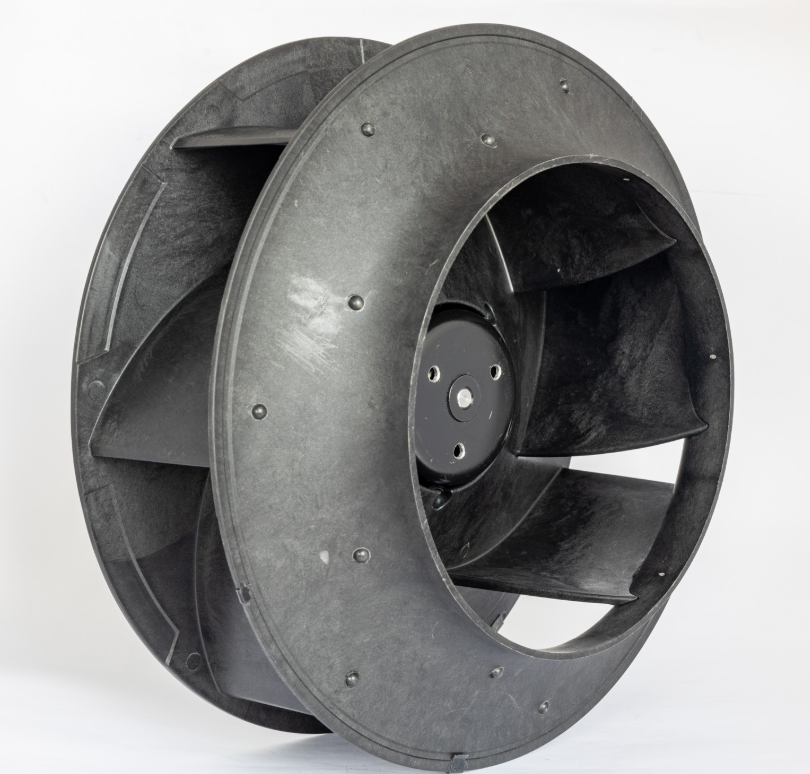
Let's be honest for a second. When you are knee deep in a project that involves moving air, whether it is venting out a dusty workshop or keeping a server room from turning into a pizza oven, the last thing you want to do is guess. You do not want to scroll through endless spec sheets filled with performance curves that look like a heart monitor reading. You just want to know what works. And if you are dealing with any kind of serious resistance in your ductwork or system, the conversation almost always leads to one specific piece of gear: the backward inclined centrifugal blower.
This is not just industry jargon for the sake of sounding fancy. It is a specific design that solves a very real problem. A lot of people get stuck because they think all fans are the same. They figure if it spins, it blows air, end of story. But that mindset is a quick path to burnt out motors and disappointing airflow numbers. A backward inclined centrifugal blower is a different beast altogether. It is built for efficiency when the going gets tough. And honestly, understanding when to use this type of blower versus a basic forward curved fan can be the difference between a system that hums along quietly for a decade and one that sounds like a jet engine while draining your bank account.
The Basic Physics Behind the Quiet Efficiency
You do not need an engineering degree to get this, but you do need to visualize the wheel. In a backward inclined centrifugal blower, the blades are angled away from the direction of rotation. Imagine trying to scoop water out of a river. If you scoop forward, you catch a ton of water, but it is chaotic and splashes everywhere. If you kind of glide through it backward, you get a smoother, more controlled flow. That is essentially what is happening inside the housing.
Because the blades are oriented this way, the air moves through the channel more gently. The flow path expands gradually rather than being forced into a sharp turn. This aerodynamic advantage translates directly to less turbulence. Less turbulence means less noise. It also means less wasted energy because the impeller is not fighting itself. The energy you are pulling from the wall actually goes toward moving the air instead of creating a racket. This is why you will find this specific backward inclined centrifugal blower design at the heart of systems that need to run nonstop without driving everyone in the building crazy. It is a mature, proven piece of mechanical logic that simply outperforms the older, squeaky alternatives.
The Critical Difference Between Moving Air and Overcoming Resistance
This is where the rubber meets the road, or rather, where the fan meets the duct. Some fans are great at moving massive volumes of air in an open space. Think of a window fan on a summer night. There is almost no resistance, so it can push a ton of cubic feet per minute easily. But the moment you attach that fan to a long, winding duct or force it to pull air through a dense filter, it basically gives up. Its performance drops off a cliff. This is where a backward inclined centrifugal blower flexes its muscles.
These blowers are designed to handle what engineers call "static pressure." That is just a fancy term for the invisible force pushing back against the air. It is the friction of the duct walls and the clogging of a filter. A backward inclined centrifugal blower maintains its airflow much better as that pressure increases. It has a non-overloading power curve, which means that as the system resistance goes up, the blower does not just suck down more electricity until the motor burns out. It actually self-regulates. This is a massive safety feature and a huge cost saver. You are not constantly replacing motors because someone left a damper closed or forgot to change a filter. You want this kind of reliability when you are dealing with equipment that is hard to access or expensive to shut down.
Navigating the Confusion Between Curved and Inclined Wheels
Now, you might be staring at a catalog wondering what the real difference is between a backward "curved" wheel and a backward "inclined" wheel. Honestly, even people in the industry use the terms loosely, but there is a subtle distinction worth noting. A backward inclined centrifugal blower typically has flat blades that are tilted backward. They are straightforward to manufacture and extremely robust. You will often see them in applications where the air is not perfectly clean, maybe there is a little bit of dust or light grease floating around.
Backward curved wheels are the more aerodynamic cousins. They usually have an airfoil shape, almost like a hollow airplane wing. They are incredibly efficient and slightly quieter at high speeds, but they can be a bit more sensitive to buildup of gunk on the blades. If you are running a pristine lab or a high end HVAC system with perfect filters, the curved airfoil is great. But if you are venting a commercial kitchen hood or a dusty manufacturing cell, the flat, backward inclined design is the workhorse you want. It is easier to clean and less likely to get knocked out of balance by a little bit of debris. This is the kind of nuance that separates a solution that lasts from one that becomes a maintenance nightmare.
When the Heat is On and the Filtration is Heavy
Let's talk about specific scenarios. If you are designing a system that involves a baghouse dust collector or a cartridge filtration unit, you are in prime territory for a backward inclined centrifugal blower. These systems rely on a high pressure differential to pull dirty air through the filter media. A standard blower would stall out as the filters load up with dust. The backward inclined design just keeps chugging along, maintaining the necessary suction to keep the work environment safe.
The same logic applies to combustion air. If you are feeding air to a boiler or an industrial oven, you need a stable, consistent flow. You cannot have the flame flickering because the blower is surging. The flat power characteristic of a backward inclined centrifugal blower provides that rock steady performance, ensuring the burner gets exactly what it needs whether the outside air is cold and dense or warm and thin. It is also a smart choice for heat recovery ventilators and air handling units because you get that high static pressure capability in a package that is actually pretty compact compared to other high pressure fan types. You are getting a lot of performance without having to carve out a massive footprint in a crowded mechanical room.
The Long Game: Why Energy Efficiency Actually Matters Here
It is easy to look at the upfront cost of a piece of equipment and pick the cheapest option. But with air movement, that is a trap. A backward inclined centrifugal blower is not the cheapest fan you can buy off the shelf. But it is, without question, one of the cheapest to operate over the long haul. We are talking about efficiency ratings that can hover between seventy five and eighty five percent, sometimes even higher depending on the motor pairing. Compare that to a forward curved blower, which might be cruising along at sixty percent efficiency on a good day, and the math starts to look really different when you are running the thing twenty four seven.
The energy savings are not just good for the planet; they are great for the operating budget. In a world where electricity costs are only going one direction, investing in a high efficiency backward inclined centrifugal blower is one of those rare decisions that actually gets smarter over time. It is the kind of component that, once installed, you can pretty much forget about except for basic bearing lubrication. It just works. And for anyone who has ever had to wrestle with a failed exhaust fan in the middle of a production run, that peace of mind is worth every extra dollar spent upfront.
Making the Call on Your Next Project
So when do you actually pull the trigger and specify one of these blowers? You know it is time when your application involves ducts longer than just a few feet, or when you are pushing or pulling air through anything that creates resistance like coils, heat exchangers, or dense filters. If you need the blower to live in a hot environment or handle air that is not perfectly clean, the backward inclined design is generally going to be more forgiving than the tightly toleranced airfoil alternatives. It is the ideal choice for industrial ventilation, spray booths, and general process cooling.
Ultimately, picking the right blower is about matching the tool to the task. If you are just stirring the air in an open warehouse, grab an axial fan and call it a day. But if you are building a system that needs to overcome pressure with minimal noise and maximum reliability, a backward inclined centrifugal blower is the foundation you want to build on. It is the quiet, steady workhorse that keeps things running smoothly behind the scenes. And in any well designed facility, that is exactly the kind of reliability you are paying for.
Table of Contents
- The Basic Physics Behind the Quiet Efficiency
- The Critical Difference Between Moving Air and Overcoming Resistance
- Navigating the Confusion Between Curved and Inclined Wheels
- When the Heat is On and the Filtration is Heavy
- The Long Game: Why Energy Efficiency Actually Matters Here
- Making the Call on Your Next Project