 EN
EN

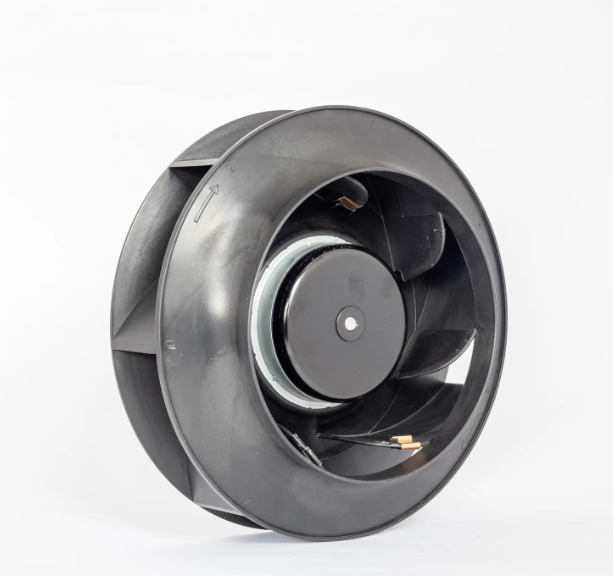
If you have ever worked with air moving equipment, you know that not all fans are created equal. Some are great at moving large volumes of air with little resistance, while others are built to push against high pressure. Then there is the question of consistency. In many applications, what really matters is steady, predictable airflow—no sudden dips, no erratic behavior. That is where the design of the impeller makes all the difference. One type that stands out for stability is the backward inclined fan. It has a reputation for delivering smooth, reliable performance, especially in systems where conditions change.
Let us look at how its design works to keep airflow stable.
The Blade Shape That Reduces Turbulence
The first thing to notice about a backward inclined fan is the blade curvature. Instead of scooping air like a forward curved blade, the blades lean away from the direction of rotation. This might seem counterintuitive, but it is exactly what creates a more stable air stream.
When air enters the impeller, it hits the blades at a specific angle. Because the blades are inclined backward, the air flows smoothly along the blade surface without getting trapped or suddenly changing direction. This reduces turbulence inside the housing. Turbulence is the enemy of stable airflow—it causes fluctuations, noise, and inefficiency. By minimizing it, the fan produces a more consistent output. The result is a steady stream of air that does not pulse or surge, which is critical for applications like HVAC systems, cleanrooms, or industrial drying processes.
How the Impeller Handles Pressure Changes
One of the biggest challenges for any fan is dealing with changes in system resistance. Think of a ventilation system where filters get clogged over time, or an air handling unit where dampers open and close. When resistance goes up, some fans will struggle and their airflow drops off sharply. Others might even experience a condition called “stall,” where the airflow becomes unstable and the fan starts to shudder.
A backward inclined fan has a performance curve that is naturally well suited to handling these variations. The curve is relatively flat, meaning that airflow does not drop dramatically when pressure increases. More importantly, the fan has a wide operating range before it reaches the point of instability. This gives the system some breathing room. You do not have to worry about minor changes in system conditions throwing everything off. The fan just keeps moving air at a steady rate, adapting without dramatic swings.
The Relationship Between Efficiency and Stability
Stability is not just about avoiding sudden drops. It is also about operating in a way that does not waste energy. An inefficient fan is often an unstable fan because it is working harder than it needs to. Wasted energy shows up as heat, vibration, and erratic behavior.
The backward inclined fan is known for high efficiency. Because the blades are designed to let air exit cleanly without much impact loss, the motor does not have to fight against its own impeller. This smooth energy transfer means the fan runs with less vibration. Less vibration translates to more predictable performance over time. When a fan runs smoothly, bearings last longer, the motor stays cooler, and the overall system remains in a steady state. So, efficiency and stability go hand in hand with this design.
Why the Housing Design Matters
You cannot talk about stable airflow without looking at the housing. The impeller might do the work, but the housing guides the air and collects it before it exits. In a backward inclined fan, the housing is typically designed with a volute shape that matches the blade geometry.
This volute gradually expands as it wraps around the impeller. It acts like a diffuser, converting the high velocity air leaving the impeller into static pressure without creating turbulence. A well matched housing ensures that the air slows down evenly, which smooths out any remaining irregularities in the flow. If the housing is poorly designed, even a great impeller will produce a choppy, uneven airflow. But when everything is matched correctly, the air comes out as a steady, uniform stream.
Built for Consistent Performance in Demanding Environments
Stability is not just a design concept. It shows up in how the fan behaves over long periods of operation. In real world settings, fans face temperature swings, dust accumulation, and continuous running hours. A fan that starts off stable can become unstable if components wear unevenly or if the motor overheats.
A well made backward inclined fan addresses this with robust construction. The impeller is usually made from materials that resist corrosion and fatigue, such as coated steel or aluminum. The bearings are selected to handle the loads without excessive wear. And because the fan runs efficiently, it generates less heat, which helps all the components last longer. When a fan can maintain its performance month after month without drifting, that is true stability.
Where You Typically See This Design in Action
If you look at applications where stable airflow is nonnegotiable, you will often find a backward inclined fan at the heart of the system. These fans are common in HVAC equipment like air handlers and rooftop units where consistent air distribution matters for comfort. They are also used in industrial processes like drying, coating, or fume extraction, where variations in airflow could affect product quality.
In cleanrooms and laboratory environments, steady airflow is critical for maintaining pressure differentials and contamination control. The same goes for data center cooling, where uneven airflow can create hot spots that threaten equipment reliability. In all these cases, the choice of fan directly affects how well the system performs. Engineers reach for a backward inclined fan when they need a solution that will deliver predictable results day in and day out.
So, how does a backward inclined fan achieve stable airflow? It comes down to smart design. The blade shape reduces turbulence, the performance curve handles pressure changes smoothly, and the housing guides the air into a uniform stream. Combined with efficient operation and durable construction, these features make it a go to choice for anyone who values consistency over raw power. When your system needs to run right day after day, this is the kind of fan that delivers.