 EN
EN

Understanding the Basics of Airflow Direction
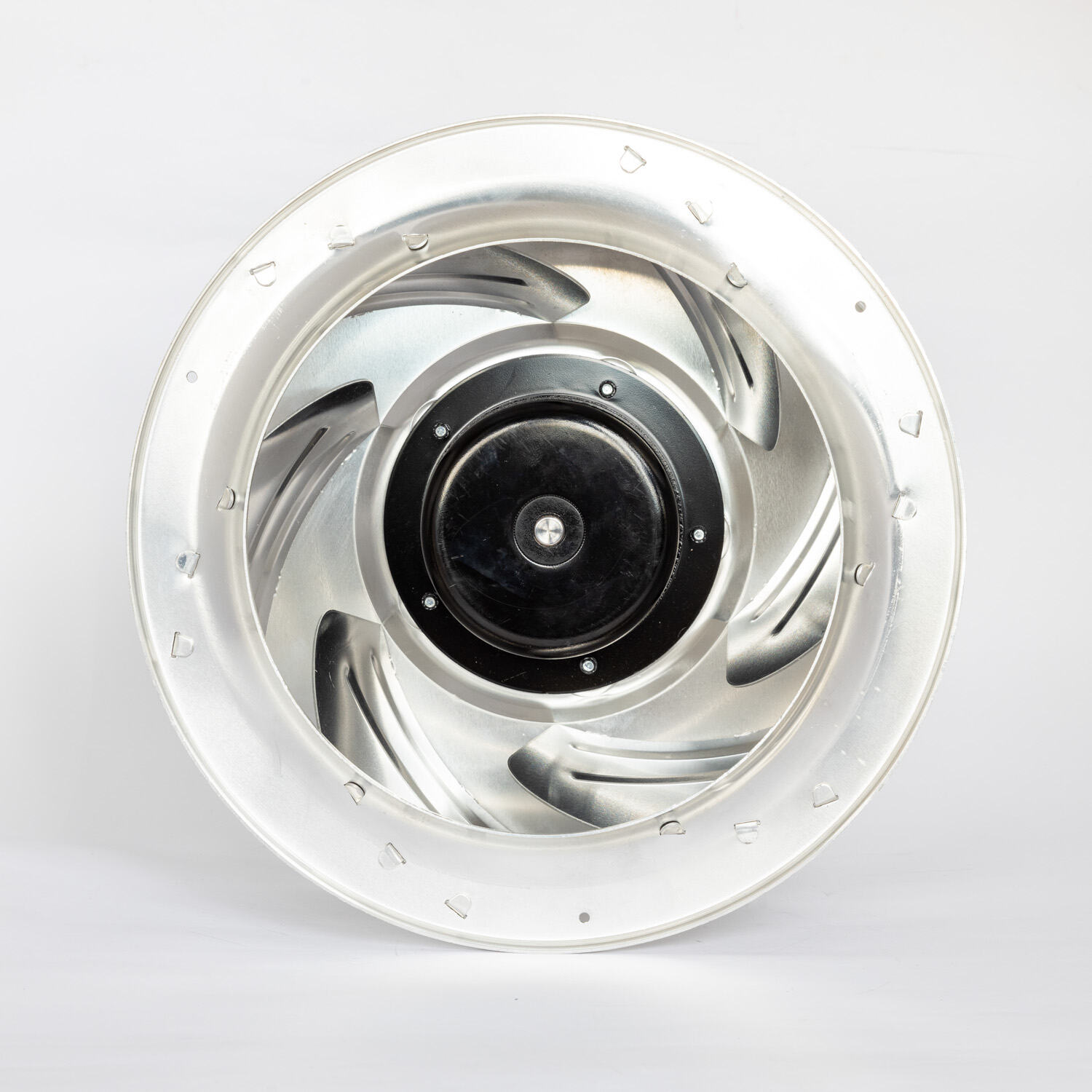
The most fundamental difference between a centrifugal fan and axial fan comes down to how each one moves air. An axial fan pulls air in and pushes it out along the same axis, the same direction the blades spin. Think of a desk fan or a ceiling fan. Air enters from behind and exits straight ahead. A centrifugal fan works differently. It draws air in along the axis of the impeller and then flings it outward perpendicular to that axis using centrifugal force. The air enters the center and exits at a ninety degree angle through a scroll housing or outlet. This basic difference in airflow path shapes everything else about how these two fan types perform, where they get used, and what kind of systems they fit into.
Pressure and Volume Tradeoffs That Define Performance
If you need a lot of air moved across a short distance with little resistance, an axial fan is the natural choice. It delivers high airflow volume against low pressure, which makes it efficient for open ventilation, cooling electronic enclosures, or moving air through short duct runs with minimal restrictions. The downside is that axial fans struggle when they face resistance. Put an axial fan against a clogged filter or a long duct, and its airflow drops sharply. A centrifugal fan takes the opposite approach. It generates high pressure at the cost of some airflow volume. That high pressure allows it to push air through long ductwork, dense filters, coils, and other system components that create resistance. This is why centrifugal designs dominate in HVAC systems, industrial processes, and anywhere air needs to travel a complicated path before reaching its destination.
Noise Characteristics and Installation Differences
The sound profile of a centrifugal fan and axial fan also differs in ways that matter for real world installations. Axial fans tend to produce noise that is more audible at the blade pass frequency, that characteristic whir or buzz. The noise travels along the airflow path, which means it can carry through ductwork into occupied spaces. Centrifugal fans generate sound that is generally lower in frequency and more broadband. Much of that noise gets contained within the scroll housing rather than radiating downstream. In terms of physical installation, axial fans fit neatly inline within ducts and take up less space in the flow path. Centrifugal fans need more room because of the scroll housing, and their inlet and outlet are at right angles, which requires more planning in system layout. Neither type is universally quieter or easier to install. The application dictates which tradeoffs make sense.
Motor and Efficiency Considerations
Both axial and centrifugal fan designs have benefited from the shift to EC motor technology. Electronically commutated motors integrate brushless DC motor efficiency with the convenience of AC power input. When paired with either fan type, EC motors deliver energy savings compared to traditional shaded pole or PSC motors. The motor choice does not change the fundamental airflow characteristics of the fan, but it does improve controllability, reduce operating costs, and extend service life. A centrifugal fan and axial fan each have their sweet spot, and matching the right motor to the right impeller for the right application is where good engineering shows its value.
Choosing the Right Fan for the Job
The decision between a centrifugal fan and axial fan starts with three questions. How much airflow do you need? How much resistance will the fan face? What are the space and noise constraints? For open cooling, cabinet ventilation, and low resistance exhaust, axial fans usually win. For systems with filters, long ducts, or high pressure requirements, centrifugal fans are the better bet. Some applications even use both types working together, an axial fan for general airflow and a centrifugal unit for high pressure zones. Understanding the fundamental differences between a centrifugal fan and axial fan helps avoid the costly mistake of fitting the wrong fan to the wrong system.
Alright, so picking between a centrifugal fan and axial fan is really about understanding what the air has to go through. High volume with low resistance calls for axial. High pressure with lots of obstacles calls for centrifugal. Once you see that basic split, the rest of the decision falls into place pretty naturally.