 EN
EN

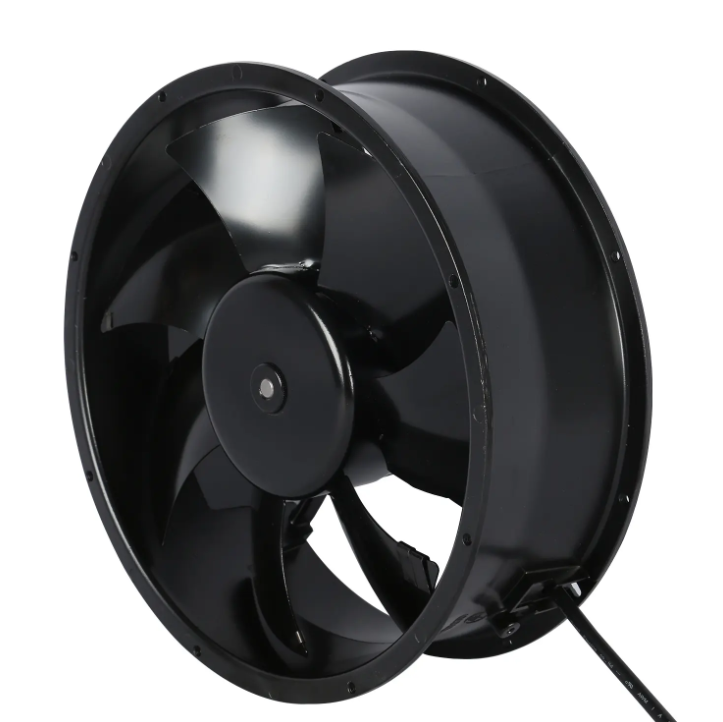
If you have ever walked past a building and felt a stream of air coming out of a vent, or if you have noticed a fan mounted in a ceiling or a wall, chances are you were looking at an axial duct fan. These fans are everywhere, but most people do not know what they are called or how they work. They are simple, effective, and one of the most common types of fans you will find in ventilation systems. I have spent plenty of time around fans and motors, and axial fans are one of those things that once you understand them, you start noticing them everywhere. So let us break down what an axial duct fan actually is and where you are most likely to find one.
What Exactly Is an Axial Duct Fan?
The name tells you a lot. Axial means the air flows parallel to the axis of the fan. Think of a propeller on a plane. The blades spin, and the air moves straight through in the same direction as the shaft. An axial duct fan is simply that same idea, but housed in a cylindrical casing that fits into a duct system. The fan pulls air in from one end and pushes it out the other, all in a straight line. This straight through design is what makes axial fans so efficient for moving large volumes of air. They are not great at creating high pressure, but when you need to move a lot of air with minimal resistance, an axial fan is often the answer.
How to Spot an Axial Duct Fan
Identifying an axial duct fan is not hard once you know what to look for. The fan will be housed in a cylindrical tube, often made of metal or plastic, with flanges on each end so it can be connected to ductwork. Inside, you will see a set of blades attached to a central hub. The number of blades can vary, but three to six is common. The blades are shaped like airfoils, similar to airplane wings, and they are designed to push air efficiently. If the fan has a motor mounted in the center or off to the side with a belt drive, and the air flows straight through without changing direction, you are looking at an axial duct fan.
How It Works
The principle behind an axial duct fan is straightforward. The motor spins the blades, and the blades create a pressure difference. Air is drawn into the inlet, accelerated by the blades, and then discharged at the outlet. Because the air path is straight, there are no sharp turns or changes in direction that would create resistance. This allows the fan to move a high volume of air with relatively low energy consumption. The performance of an axial fan is measured in terms of airflow and static pressure. For applications where the system resistance is low, like moving air through a short duct or a ventilation grille, axial fans are extremely efficient.
Where You Typically Find Them
If you have ever been in a building with a ventilation system, you have probably been near an axial duct fan. They are used in residential, commercial, and industrial settings. In homes, you will find them in bathroom exhaust fans, range hoods, and whole house ventilation systems. In commercial buildings, they are used in HVAC systems, parking garage ventilation, and stairwell pressurization. In industrial settings, they show up in factory ventilation, cooling towers, and equipment cooling. They are also common in greenhouses, agricultural facilities, and anywhere that needs fresh air circulation. Once you start paying attention, you will realize they are everywhere.
Why Axial Duct Fans Are So Popular
There are a few reasons axial duct fans are so widely used. The first is simplicity. The design is straightforward, which means fewer parts that can break and easier maintenance. The second is efficiency. For moving large volumes of air against low resistance, axial fans are hard to beat. They use less energy than centrifugal fans for the same airflow in low pressure applications. The third is size. Axial fans can be made very compact, which makes them easy to fit into tight spaces. The fourth is noise. When properly selected and installed, axial fans can be surprisingly quiet. They are not always silent, but they tend to produce a lower frequency sound that is less intrusive than some other fan types.
The Role of the Motor
An axial duct fan is only as good as the motor that drives it. The motor needs to be reliable, efficient, and matched to the fan's performance curve. In modern systems, EC motors are becoming increasingly common. These motors use electronic commutation to achieve high efficiency and precise speed control. An EC motor driving an axial fan can adjust its speed based on demand, which saves energy and reduces noise. For applications where the airflow needs to vary throughout the day, like in HVAC systems, this combination is a game changer. A good motor manufacturer will offer axial fans with EC motors built in, giving you a complete package that performs well.
Different Blade Designs
Not all axial duct fans are the same. The blade design affects how the fan performs. Some axial fans have blades that are pitched steeply, which moves more air but requires more power. Others have shallower pitch, which is more efficient but moves less air. Some blades are designed to be quiet, with special shapes that reduce turbulence. Others are built for durability, made from materials that can handle harsh environments. The choice of blade material matters too. Aluminum blades are common for general applications. Plastic blades are lighter and quieter but may not hold up as well in high temperatures. Steel blades are heavier but more durable. Knowing what you need helps you choose the right fan.
Where Axial Fans Fall Short
As good as axial fans are, they have limitations. They are not great at handling high static pressure. If the duct system is long, has many bends, or includes filters that create resistance, an axial fan might struggle. In those cases, a centrifugal fan is often a better choice. Axial fans can also be sensitive to conditions at the inlet and outlet. If the airflow is obstructed or uneven, performance can drop off. They are generally best suited for clean air applications. Dust, grease, or other contaminants can build up on the blades and affect balance and performance. For dirty air, a different fan type might be needed.
Installation and Placement
Where you put an axial duct fan matters. They are designed to be installed inline with ductwork, meaning the duct connects to both the inlet and outlet. The fan needs to be accessible for maintenance, so leaving enough space around it is important. The orientation matters too. Some axial fans are designed to be mounted horizontally, others vertically. The manufacturer's instructions will tell you what works best. Proper installation ensures the fan performs as expected and lasts as long as it should.
Maintenance Tips
Axial duct fans are generally low maintenance, but they do need occasional attention. The most common issue is dust buildup on the blades. Over time, dust can accumulate and throw the blades out of balance, causing vibration and noise. A simple cleaning with a soft brush or compressed air can fix this. The motor bearings also need to be checked. Some fans have sealed bearings that do not need lubrication, but others may require periodic greasing. If the fan starts making unusual noises or vibrating, it is a sign that something needs attention. Catching problems early keeps the fan running longer.
A Fan for Every Application
The beauty of axial duct fans is that they come in so many sizes and configurations. You can find tiny fans for electronics cooling, medium sized fans for residential ventilation, and massive fans for industrial air handling. The basic principle is the same, but the scale changes. For a manufacturer that specializes in fans and motors, having a range of axial fans is essential. They are a core product that serves countless applications.
The Bottom Line
An axial duct fan is one of those simple technologies that just works. It moves air efficiently, quietly, and reliably. It fits into duct systems easily. It comes in sizes that work for everything from a small bathroom to a large factory. And when it is paired with a good motor, it delivers performance that you can count on. So the next time you feel air moving through a vent or hear that gentle hum from a ventilation system, you will know what is doing the work. It is an axial duct fan, quietly doing its job.
Table of Contents
- What Exactly Is an Axial Duct Fan?
- How to Spot an Axial Duct Fan
- How It Works
- Where You Typically Find Them
- Why Axial Duct Fans Are So Popular
- The Role of the Motor
- Different Blade Designs
- Where Axial Fans Fall Short
- Installation and Placement
- Maintenance Tips
- A Fan for Every Application
- The Bottom Line