 EN
EN

If you have ever looked inside an air conditioner, a ventilation system, or a piece of industrial equipment, you have probably seen a fan. But not all fans are the same. Some have blades that look like they are leaning backward. Others have blades that curve forward, almost like a scoop. Those are forward curved blade fans, and they are everywhere once you start looking. I have spent a fair amount of time around fans and motors, and one thing I have learned is that understanding the blade shape tells you a lot about what the fan is good for. So let us talk about how to spot a forward curved blade fan and where you are most likely to find one.
What Does a Forward Curved Blade Fan Look Like?
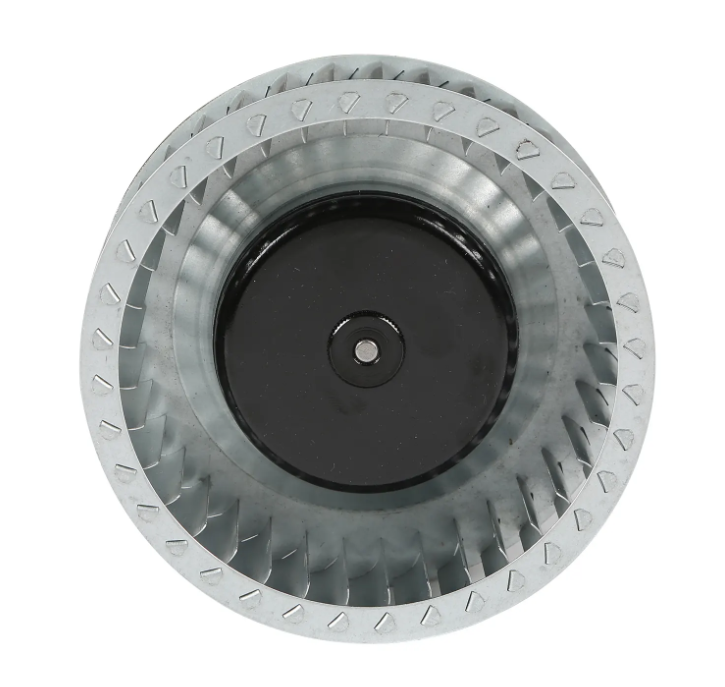
The name tells you exactly what to look for. A forward curved blade fan has blades that curve in the direction of rotation. Imagine the fan spinning. The leading edge of the blade is the one that hits the air first. On a forward curved blade, that leading edge is actually the outer edge of the curve, and the blade scoops forward. It looks a bit like a hamster wheel or a squirrel cage, which is why these fans are often called squirrel cage blowers. The blades are usually short and numerous, packed closely together around the circumference of the wheel. If you see a fan that looks like a cylindrical cage with many small blades curving forward, you are looking at a forward curved blade fan. They are sometimes called centrifugal fans because the air moves outward from the center, driven by centrifugal force.
How to Spot the Difference
If you are trying to identify a forward curved blade fan, there are a few telltale signs. First, look at the blade shape. Are the blades curving in the same direction as the wheel rotates? If yes, it is forward curved. Second, look at the number of blades. Forward curved fans usually have many blades, often 30 or more, packed tightly together. Third, look at the housing. These fans typically have a scroll shaped housing that directs the air flow. The air enters at the center of the wheel and is thrown outward by the spinning blades, then collected by the housing and discharged through an outlet. A forward curved blade fan is almost always part of a centrifugal fan assembly, meaning it looks more like a blower than a simple propeller fan.
How It Works
The way a forward curved blade fan moves air is a bit different from other fan types. Air enters the center of the wheel, called the eye. As the wheel spins, the curved blades catch the air and throw it outward using centrifugal force. The air accelerates as it moves through the blades and then is collected by the scroll housing. That housing converts the high speed air into pressure, so the fan can push air through ducts, filters, or other components. What makes forward curved fans special is that they can move a decent amount of air while operating at relatively low speeds. They are not the most efficient fans in terms of energy use, but they are quiet and compact, which makes them a good fit for many applications.
Where You Usually Find Them
If you have ever stood next to an air conditioner or a furnace, you have probably heard a forward curved fan running. These fans are the workhorses of the HVAC world. They are used in residential and commercial heating and cooling systems to push air through ductwork. You will also find them in air handling units, ventilation systems, and exhaust fans. In industrial settings, forward curved fans show up in clean air applications where the air is free of dust and debris. They are not great for handling dirty air because the tight blade spacing can clog up easily. But for moving clean air quietly and reliably, they are hard to beat.
Advantages of Forward Curved Fans
One of the biggest advantages of a forward curved blade fan is its compact size. For the amount of air it moves, the fan wheel is relatively small. That makes it a good fit for equipment where space is tight. Another advantage is noise. Forward curved fans operate quietly compared to other types of centrifugal fans. The blades are small and numerous, which helps spread the work across many surfaces, reducing the noise that comes from air turbulence. They also run at lower speeds than backward curved fans, which helps keep the sound down. For applications where noise is a concern, like in office buildings or residential HVAC, forward curved fans are often the go to choice.
Limitations to Keep in Mind
No fan is perfect for every job, and forward curved fans have their limitations. They are not the most energy efficient option. The blade design creates more internal losses than some other designs, so they use more power to move the same amount of air. They also have a limited pressure range. If the system resistance is too high, the fan performance drops off quickly. That is why you usually see them in low to medium pressure applications. Another limitation is that they do not handle dirty air well. The tight blade spacing means dust and debris can build up quickly, causing imbalance and reducing performance. If the air stream has any kind of particulate, a different fan type might be a better choice.
How to Choose the Right One
If you are selecting a forward curved blade fan for a project, there are a few things to consider. First, look at the airflow and pressure requirements. Forward curved fans work best in applications where the system resistance is relatively low. Think ducted systems with clean air, like HVAC or ventilation. Second, consider the noise level. If quiet operation is important, forward curved fans are a good option. Third, look at the physical space. These fans are compact, which is a plus when space is limited. Finally, think about the air quality. If the air is clean, forward curved fans will serve you well. If there is dust or grease, you might want to look at a backward curved or radial blade fan.
Why Manufacturers Choose Them
When you look at companies that make fans and motors, you will see forward curved fans showing up in their product lines. The reason is simple. They meet the needs of a huge range of applications. HVAC equipment, air purifiers, refrigeration units, all of these rely on forward curved fans to move air quietly and reliably. For a motor and fan manufacturer, having a solid forward curved fan offering is essential. It is a core product that goes into countless systems. And when the fan is matched with an efficient motor, like an EC motor, you get a combination that delivers good performance without using too much power.
Real World Examples
Think about the air conditioner in your home. When it kicks on, you hear a low hum. That is a forward curved fan moving air through the ducts. Think about the fan in a bathroom exhaust. That is often a forward curved blower as well. In commercial buildings, the air handlers on the roof are filled with forward curved fans. In industrial settings, you might find them in clean rooms, laboratories, or any place where clean, quiet airflow is needed. Once you start paying attention, you will notice them everywhere.
Maintenance and Longevity
Forward curved fans are generally low maintenance if they are used in the right environment. Because the blades are small and closely spaced, keeping them clean is important. Any buildup of dust or debris can throw the wheel out of balance and cause vibration. Regular inspection and cleaning are good habits. The bearings also need attention. Most forward curved fans use sealed bearings that do not require lubrication, but they do wear out over time. A fan that starts making noise or vibrating is often telling you it is time for maintenance. Catching problems early keeps the fan running longer.
The Role of the Motor
A forward curved fan is only as good as the motor driving it. Pair it with a good motor, and you get efficiency and reliability. Pair it with a cheap motor, and you might get noise, vibration, and short life. That is why many manufacturers, like the one I have worked with, put a lot of effort into matching the fan to the right motor. EC motors are a popular choice because they are efficient and can be speed controlled easily. When you have a forward curved fan running on an EC motor, you get a system that can adjust to changing conditions while using less energy.
A Fan for the Job
At the end of the day, forward curved blade fans are everywhere because they work. They are not the most efficient, and they are not the most powerful, but they are the right tool for a huge number of jobs. They move air quietly. They fit into tight spaces. They run reliably for years. And when they are paired with a good motor, they deliver the performance that HVAC and ventilation systems depend on. So the next time you hear that low hum from an air conditioner or feel air moving through a vent, take a moment to appreciate the little forward curved fan making it all happen.
Table of Contents
- What Does a Forward Curved Blade Fan Look Like?
- How to Spot the Difference
- How It Works
- Where You Usually Find Them
- Advantages of Forward Curved Fans
- Limitations to Keep in Mind
- How to Choose the Right One
- Why Manufacturers Choose Them
- Real World Examples
- Maintenance and Longevity
- The Role of the Motor
- A Fan for the Job