 EN

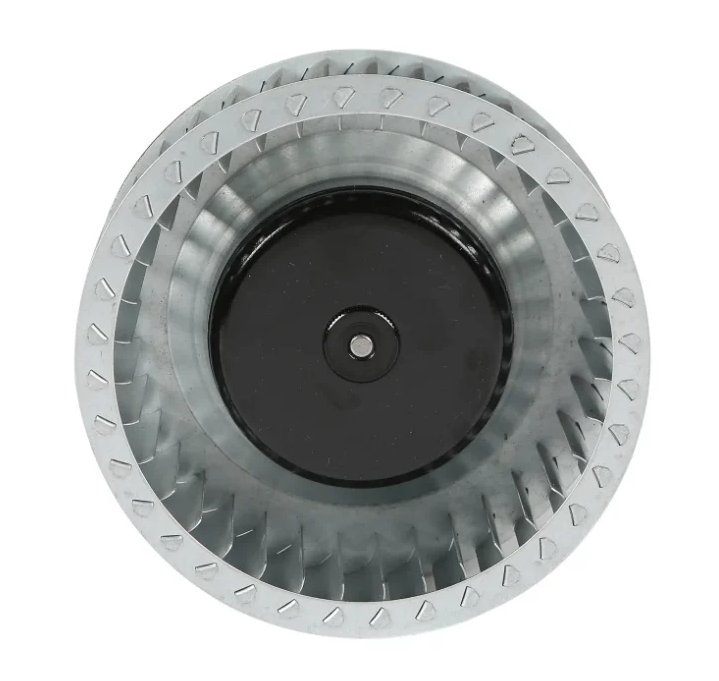
Why Forward Curved Plug Fans Fit HVAC Layouts
A forward curved plug fan uses a centrifugal impeller with many shallow blades that curve in the direction of rotation. That shape moves a large volume of air at a relatively low static pressure. In HVAC systems, this matches many real operating conditions. Air handling units, return air plenums, and exhaust systems often need high flow with modest pressure. A forward curved plug fan delivers that without a large scroll housing. The impeller sits directly in the duct or plenum. This removes the need for a separate fan room and long outlet transitions. The result is a compact layout that fits tight mechanical rooms and retrofit projects. The tradeoff is that forward curved fans are sensitive to dirty air and sharp inlet bends. Good filtration and a smooth approach keep performance stable.
How Airflow and Pressure Characteristics Match HVAC Loads
HVAC systems rarely need extreme static pressure. They need dependable airflow across filters, coils, and dampers. A forward curved plug fan provides a steep pressure curve, which means small changes in system resistance cause larger changes in flow. That behavior can be useful for constant volume systems. It also means the fan must be selected close to its best efficiency point. Oversizing leads to wasted energy and noise. Undersizing leads to poor comfort. The table below compares common fan types for HVAC duty. Values are typical and vary by manufacturer and model.
| Fan Type | Airflow | Static Pressure | Noise | Compactness | Best Use |
|---|---|---|---|---|---|
| Forward curved plug | High | Low to medium | Moderate | High | AHUs, plenums, return air |
| Backward curved plug | Medium to high | Medium to high | Lower | High | Variable air volume, filters |
| Axial duct fan | Medium | Low | Moderate | High | Small duct runs, exhaust |
| Traditional centrifugal | Medium | High | Moderate | Low | High pressure systems |
The comparison shows why forward curved plug fans remain common in air handling units. They move a lot of air in a small space. When paired with an EC motor, they can also modulate speed to match load. That combination supports part load efficiency without a large footprint.
Compact Design and Installation Advantages
Space is a premium in modern buildings. A forward curved plug fan can be mounted inside a plenum or a short duct section. There is no scroll to route around. Service access can be provided through a panel or door. Installation is simpler because the fan becomes part of the air path. Duct transitions are shorter, which reduces pressure loss and material cost. For retrofit projects, this matters even more. Existing mechanical rooms often have no room for a new fan and housing. A plug fan can drop into an existing plenum and connect to the same ductwork. That saves demolition and downtime. The limitation is that inlet conditions matter. A sharp bend close to the inlet creates swirl, noise, and reduced performance. A short straight section before the fan protects airflow quality.
Motor Choices, Controls, and Energy Use
Modern forward curved plug fans often use EC motors. These motors have integrated electronics for precise speed control. They accept analog or digital signals from a building management system. That makes it easy to ramp down airflow when spaces are unoccupied. The U.S. Department of Energy has noted that fan energy can be a significant share of building electricity consumption, so part load control matters. A fan that runs at reduced speed during low demand saves energy. Constant pressure control works well for variable air volume systems. Constant flow control suits process exhaust. Temperature or CO2 based control is common in commercial offices. The limitation is that EC motors are sensitive to heat and power quality. Proper cooling and surge protection are important. A cheap controller can cancel the benefits of a good motor.
A Real Retrofit Case from a Commercial Building
A commercial office building in eastern China needed to upgrade its return air system. The original design used a traditional centrifugal fan in a dedicated fan room. The room took up tenant space and the long duct run created pressure losses. The project team replaced the fan with a forward curved plug fan mounted in the return air plenum. The new layout freed the fan room for storage. During commissioning, the team measured higher noise than expected. Inspection found a 90 degree bend only one duct diameter from the inlet. Adding a short straight section and a turning vane reduced noise to acceptable levels. The lesson is that plug fans reward careful inlet design. AMCA standards for air performance and ASHRAE duct design guidance both stress approach conditions. A compact fan still needs a clean airflow path.
Specifying the Right Fan with Fanova Support
Selecting a forward curved plug fan starts with airflow, static pressure, and available space. Then check inlet conditions, noise limits, and control requirements. A fan selected near its best efficiency point will run smoothly. A fan that is oversized wastes energy and may surge. A fan that is undersized will not meet demand. Fanova, founded in 2003, is an EC fan manufacturer focused on research, design, customization, and production of EC centrifugal fans, axial fans, and volute fans. Fanova serves purification and HVAC systems, ventilation equipment, transportation facilities, medical infrastructure, home appliances, and machinery. For projects that need a compact fan with flexible controls, Fanova offers technical support and manufacturing depth. The best HVAC layout matches the fan to the space, the air path, and the load profile. A forward curved plug fan can deliver that match when the design respects inlet conditions and control strategy.