 EN
EN

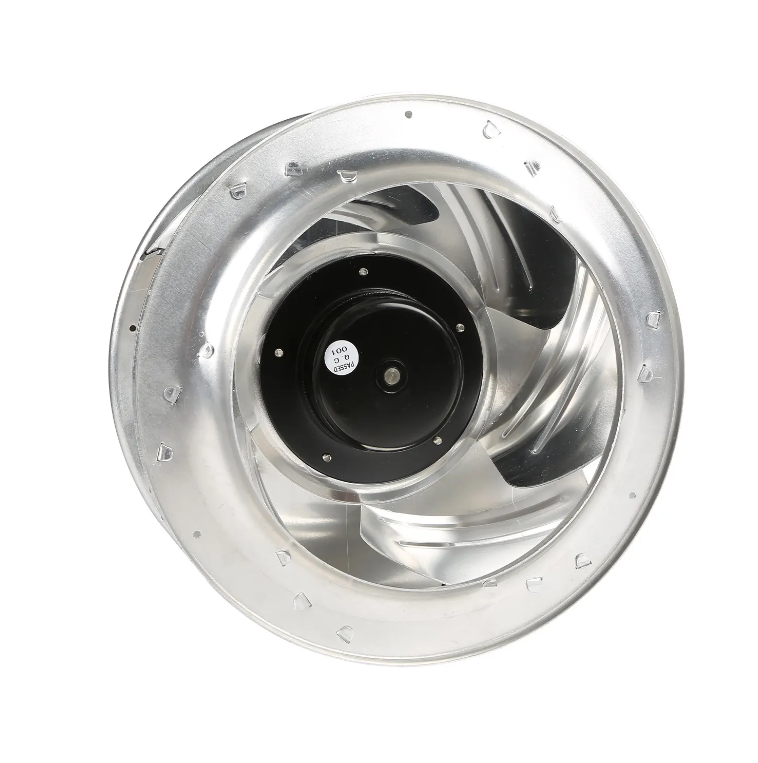
Why Your Old Fan Is Costing You More Than You Think
Walk into any older building, and you will hear the hum of constant speed fans running in air handlers, exhaust systems, or cooling units. Those old AC induction motors were built to last, but they were not built to save energy. A typical permanent split capacitor motor driving a fan runs at full speed all the time, even when you only need half the airflow. That means wasted electricity, more noise than necessary, and extra wear on bearings. I once audited a mid sized office building with 20 air handling units. Each unit had a 300 watt AC fan running 24/7. The total fan energy was 52,800 kilowatt hours per year just for those 20 fans. After measuring actual airflow needs, we found the fans only needed to run at 70% speed most of the time. But the AC motors could not do that without expensive variable frequency drives. The building owner was throwing away almost 16,000 kWh annually for no good reason. That is the hidden cost of old fan technology.
Direct Energy Savings That Show Up on Your Bill
So why is an EC fan so much better? The answer is in the motor design. A traditional AC induction motor has a rotor with conductive bars. Current is induced into those bars, which creates magnetic field, but also creates heat from resistance. That is called rotor loss. An EC motor, or electronically commutated motor, uses permanent magnets on the rotor. There is no induced current, so no rotor loss. The built in controller sends precise pulses to the stator windings, giving you high efficiency across a wide speed range. The US Department of Energy published a study showing that replacing a shaded pole or PSC motor with an EC motor reduces fan energy consumption by 40% to 60%. Let me give you a real number. A warehouse in Ohio had two large exhaust fans with 1.2 kW AC motors each. They ran 16 hours a day, 300 days per year. That was 11,520 kWh per fan annually. After retrofitting with EC fans of the same physical size, each fan drew only 0.55 kW at the same airflow. Annual consumption dropped to 5,280 kWh per fan. Combined saving: 12,480 kWh per year. At $0.12 per kWh, that is $1,498 saved every year from just two fans. The payback was eight months.
Infinite Speed Control for Variable Airflow Needs
Airflow demand is rarely constant. In a cold storage room, you need maximum cooling when the door opens frequently. At night with the door closed, you need much less. An AC fan with a single speed either overcools or undercools. An EC fan gives you continuous speed control from zero to full. You just feed it a 0 to 10 volt or PWM signal from a thermostat, a building automation system, or even a simple potentiometer. I worked with a cold storage facility that had six evaporator fans running 24/7. The old AC fans ran at 100% all the time. The compressor had to cycle frequently because the fans were moving too much air across the coils. We retrofitted with EC fans and added a controller that reduced fan speed to 40% when the room temperature was within setpoint. The compressor run time dropped by 25% because the evaporator no longer overworked. The facility manager calculated total energy saving including compressor reduction at over 18,000 kWh per year. That came purely from variable speed control, not just fan motor efficiency.
Retrofit Compatibility and Mechanical Simplicity
One worry people have is whether a new EC fan will fit. Most EC fans are designed with the same mounting hole patterns, flange sizes, and overall dimensions as standard AC fans. Motor frame sizes are standardized. For example, a 92mm or 120mm EC axial fan often drops right into the same bracket. Electrically, EC fans typically accept a universal input of 110 to 277 volts AC, 50 or 60 Hz. That means you can run them directly from your existing power supply without a special driver. A data center operator I know decided to retrofit 48 fans in their server room cooling units. They ordered EC fans with the same 172mm frame size. Over one weekend, their maintenance team swapped out all 48 fans. The only electrical change was removing the old capacitor from each unit, because EC fans do not need start or run capacitors. Downtime was less than four hours. After the retrofit, the data center's cooling power dropped by 44%, and the fans ran quieter. That kind of simplicity makes the decision easy.
Longer Life and Lower Maintenance Costs
Old AC fans have several failure points. The start capacitor dries out. The centrifugal switch sticks. The sleeve bearings wear unevenly because the motor runs hot. EC fans eliminate all of that. They have no start capacitor, no centrifugal switch, and no brushes. The bearings are high quality sealed ball bearings rated for 50,000 hours at 40°C ambient. A hospital facility team told me their story. They had 32 fan coil units in patient rooms, each with an AC fan. They were getting six service calls per year for failed capacitors and noisy bearings. After retrofitting with EC fans over two years, they had zero fan related calls for the next 24 months. The maintenance manager said the EC fans were so reliable that he stopped stocking spare motors. The Air Movement and Control Association has published technical data confirming that EC motors have a significantly lower failure rate than AC motors of similar power, primarily due to the elimination of capacitor and brush wear. For any facility that values uptime, that reliability is gold.
How a Trusted Supplier Makes Retrofit Risk Free
From a financial standpoint, retrofitting with EC fans is one of the highest return investments you can make in existing equipment. Payback is typically under 12 months, and often under 6 months for fans that run 24/7. You also get lower cooling load from the fan motor heat itself, because an EC fan wastes less energy as heat. But to get those results, you need accurate fan matching. You cannot guess. You need real performance data. That is where an experienced manufacturer like Fanova comes in. Fanova has been producing EC motors and fans since 2003. Their precision matching service uses verifiable wind tunnel reports and noise data, so you know exactly what airflow you will get at what static pressure. Their engineers collaborate with you to ensure the retrofit fan fits your mechanical and electrical constraints. With a 5000 square meter production base and flexible order fulfillment, Fanova can supply everything from a single sample to a thousand unit batch. And the three year full warranty gives you confidence that the retrofit will perform for years. Over 80 countries and thousands of facilities have already made the switch. When you are ready to stop wasting energy, Fanova delivers the high efficiency EC fan solution you need.