 EN

Eliminating Rotor Slip and Mechanical Transmission Losses
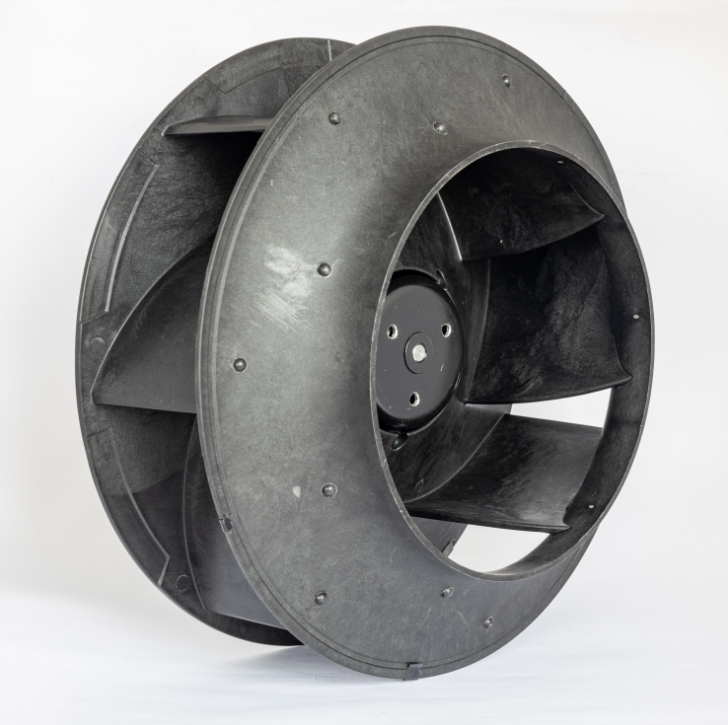
Facility managers reviewing monthly utility bills often overlook the hidden electrical drain sitting inside rooftop air handlers, cleanroom ceiling grids, and machinery cooling plenums. Traditional ventilation systems rely on alternating-current induction motors coupled to centrifugal or axial impellers via rubber V-belts or direct shafts. Because an asynchronous induction motor must induce electrical current across an air gap into a squirrel-cage rotor to create magnetic torque, substantial energy turns directly into waste heat before the shaft even spins. Deploying an energy saving ec fan changes that electromechanical equation by replacing the copper-wound induction rotor with a permanent-magnet external rotor controlled by an onboard microprocessor inverter. Without slip frequency losses or mechanical belt friction, electrical input converts smoothly into aerodynamic pressure. Furthermore, aligning motor architecture with IEC 60034-30-1 efficiency benchmarks reduces the parasitic thermal load inside conditioned spaces. When an air-moving motor runs cooler inside a commercial refrigeration case or medical air purifier, the surrounding cooling coils do not have to work as hard to remove motor-generated heat, compounding the facility's overall utility reduction.
Exploiting the Cubic Power Relationship in Partial-Load Operation
The largest financial return from electronically commutated hardware rarely comes from running at peak nameplate speed. Instead, real-world operational savings emerge during the eighty percent of the year when buildings, transportation cabins, and industrial enclosures operate under partial thermal or ventilation loads. Legacy single-speed or two-speed AC blowers regulate airflow by choking the discharge path with mechanical louver dampers or bypass valves, which forces the motor to push against artificial static resistance while drawing full amperage. Brushless permanent-magnet fans adjust rotational speed directly to match real-time demand through three practical mechanisms:
-
Direct analog and digital building integration: Onboard control boards accept standard zero-to-ten-volt DC signals, pulse-width modulation inputs, or RS-485 Modbus commands directly from differential pressure sensors and thermostats without expensive external variable frequency drives.
-
Affinity Law cubic power scaling: Fluid dynamics dictates that shaft power consumption drops in proportion to the cube of rotational speed, meaning a modest reduction in revolutions per minute yields a dramatic drop in kilowatt-hour draw.
-
Redundant modular fan-wall arrays: Replacing one massive belt-driven blower with a parallel grid of compact EC centrifugal units allows facility operators to modulate the entire array down cleanly while eliminating single-point failure risks.
According to ASHRAE Standard 90.1 energy guidelines for commercial buildings, modulating fan speed rather than throttling mechanical dampers remains one of the most effective ways to lower fan system power allowances across variable-air-volume networks.
Lifecycle Cost Comparison Across Industrial Ventilation Architectures
Evaluating air-moving investments requires looking past initial unit procurement prices and analyzing multi-year electricity consumption, ancillary drive hardware, and maintenance labor.
| Cost & Operational Dimension | Belt-Driven AC Induction Blower | VFD-Controlled AC Axial/Centrifugal | Integrated Energy Saving EC Fan |
|---|---|---|---|
| Partial-Load Power Draw | High, relies on damper throttling | Moderate, incurs external inverter losses | Minimal, tracks cubic affinity curve directly |
| Ancillary Control Hardware | Contactors, overload relays, belt guards | External VFD cabinet, shielded motor cables | None, speed control electronics built into hub |
| Routine Maintenance Tasks | Belt tensioning, pulley alignment, greasing | Bearing checks, VFD cooling filter cleaning | Virtually maintenance-free sealed ball bearings |
| Secondary Cooling Burden | High motor heat radiated into airstream | Moderate motor heat plus cabinet VFD heat | Low thermal footprint across entire operating range |
The lifecycle matrix above illustrates why procurement teams that focus exclusively on upfront fan sticker prices often end up paying far more in electrical utility charges and maintenance hours within the first two operating seasons.
Field Lessons from a Michigan Medical Center Air-Handling Retrofit
Real-world utility metering consistently validates the financial case for brushless fan retrofits in continuous-duty infrastructure. During an infrastructure modernization project at a regional medical and diagnostic facility in southern Michigan, facility engineers audited twelve aging air-handling units that supplied filtered air to outpatient laboratories and pharmacy cleanrooms. Each handler utilized a large belt-driven forward-curved blower powered by a legacy induction motor running twenty-four hours a day. Inspection logs showed that maintenance staff spent nearly forty hours every quarter replacing glazed V-belts, cleaning black rubber belt dust off downstream HEPA pre-filters, and resetting tripped thermal breakers. The engineering team removed the bulky belt-drive assemblies and installed modular bulkhead walls fitted with direct-drive backward-curved EC centrifugal fans linked to duct static-pressure transducers. Because the new impellers automatically ramped down during quiet night shifts while maintaining strict room pressure differentials, metered fan electricity consumption dropped noticeably across the wing. Equally important, eliminating rubber belt dust extended the service life of the expensive downstream medical filters by several months, delivering a secondary consumables savings that accelerated project payback.
Engineering Limitations and Sourcing Reliable Wind-Power Hardware
Honest engineering assessment requires acknowledging where integrated electronic fans fit best and where specialized alternatives apply. Because an electronically commutated motor houses sensitive Printed circuit boards inside the rotor hub, standard models are not intended for direct immersion inside explosive chemical exhaust ducts or ultra-high-temperature foundry ovens without isolated airstream designs. Additionally, facilities with severe voltage spikes on legacy power grids should specify units equipped with robust onboard surge filtering. Within normal commercial HVAC, air purification, telecom cooling, rail transit, and home appliance environments, combining optimized aerodynamic plastic or metal impellers with brushless motor control delivers unmatched operational economy.
For OEM equipment manufacturers, HVAC retrofits contractors, and industrial systems integrators seeking dependable air-moving technology, Fanova leverages over two decades of specialized R&D across EC centrifugal fans, axial fans, and volute blowers. By integrating custom engineering plastic formulations, refined motor topologies, and rigorous aerodynamic testing inside advanced production facilities, the team provides tailored, low-power wind solutions that drive down long-term operating costs across global markets.
Table of Contents
- Eliminating Rotor Slip and Mechanical Transmission Losses
- Exploiting the Cubic Power Relationship in Partial-Load Operation
- Lifecycle Cost Comparison Across Industrial Ventilation Architectures
- Field Lessons from a Michigan Medical Center Air-Handling Retrofit
- Engineering Limitations and Sourcing Reliable Wind-Power Hardware