 EN
EN

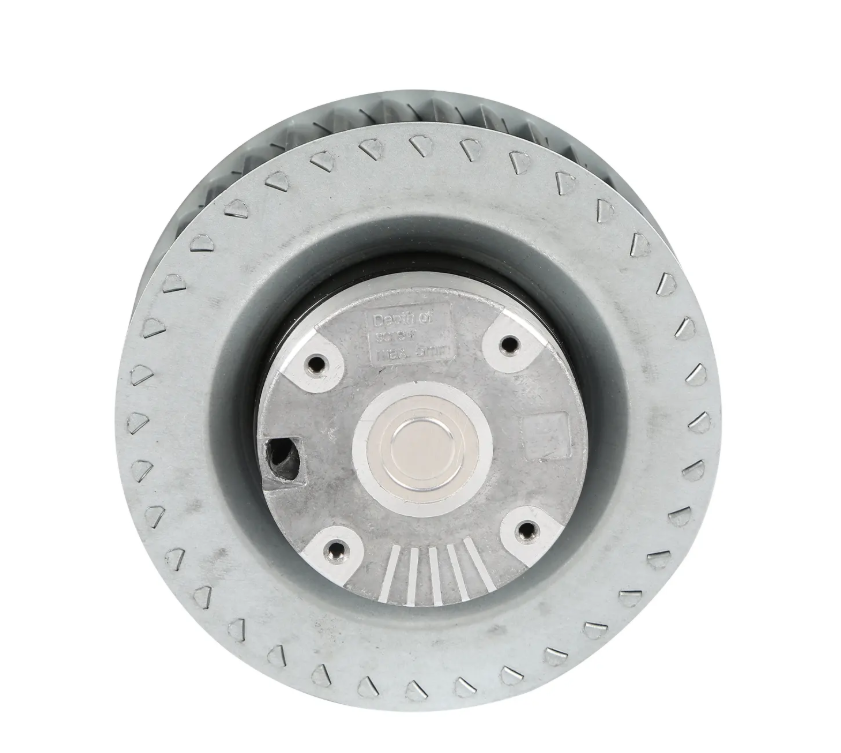
In case you need to develop an HVAC system, industrial cooling equipment, or specify cleanroom fans, you must be familiar with the concept of plug fan. These are the fans where the impeller is fully enclosed within the fan housing, and are mounted to a single panel or plenum. These are workhorses in air handler units and industrial ovens. However, an important factor is often overlooked, the fan is only as good as the motor. You could have the perfectly designed impeller, but if the motor is not matched to the application, the system will suffer. It may underperform in terms of airflow. It may be over designed in terms of energy consumption. It may overheat and fail. So, the importance of knowing how to match your plug fan motor specifications to your actual requirements is a priority. Let us explore what you need to consider.
Determine Your Expectations
Avoid looking at motor catalogs without first defining the purpose of the fan. What you want is more than simple air movement. You need quantifiable, specific information. What is the required airflow (this is often measured in cubic feet per minute or cubic meters per hour)? What is the pressure the fan must work against (this is the static pressure)? What is the resistance in the ductwork, filters, etc. components? How about the environment? Will the fan run twenty four hours a day, seven days a week? Will it be in a hot, dusty factory, or a clean, temperature-controlled lab? Your answers to these questions are the foundation for everything else. They indicate the basic performance your motor and fan combination must deliver.
Power and Speed: Getting the Basics Right
After determining your desired airflow and pressure for the job, you can turn your attention to power. In this case, this relates to the motor's horsepower or kilowatt rating. You cannot just guess an arbitrary number for power. You need just enough power to reach your performance point. Anything higher than that means you are spending too much on energy to operate the motor. In fact, oversizing a motor is a common mistake that can lead to a less efficient motor and even cause electrical and mechanical problems. Additionally, you must think about how much speed is required for the impeller to move that air. Knowing the fan's performance curves will come in handy here, as a good manufacturer will provide data illustrating how a specific fan will perform based on the speed you select. Your motor must be able to provide that torque to reach and maintain that speed under load.
The Big Shift: AC vs. EC Motors
Now it is time to look at one very large decision. What will the motor be? Historically, plug fans utilized AC induction motors. They are trustworthy and operate simply. They operate at a constant and fixed speed, or perhaps a few, if there are multiple windings. However, the game has changed. Many more uses have begun to adopt EC motors, or Electronically Commutated motors. EC motors are a type of brushless DC motor with some extra electronics to allow them to function under the AC power. The control is the real benefit. Unlike a traditional motor, EC motors are not restricted to one speed. The motor can continuously and precisely be changed to any speed. This is very desirable in a plug fan because you are able to set the exact airflow you need at any time. If you need less airflow, you can save tons of energy by running the fan at a lower speed. Companies such as Fanova, who possess extensive knowledge in both motors and fans, have been leading the way in incorporating EC technology into plug fan designs so that they can create the perfect combination of efficiency and control.
Voltage and Current: Power Supply Compatibility
It is important to ensure that the motor is compatible with the available power supply. This can mean in different parts of the world that there is single-phase or three-phase power, with varied voltages and frequencies. A motor designed to run with 230 volt, fifty hertz power supply will not function properly on a 460 volt, sixty hertz system. You will also need to take the current draw (or amperage) into consideration. This will impact the size of the wiring, circuit breakers, and other electrical components. If you get this wrong, you can expect tripped breakers, overheated wires, and burned out motors. Take the time to review the motor nameplate and the specifications provided by the manufacturer. Guides, based on the installation location of the equipment, provided by a reliable supplier will be useful.
Environmental Factors: Where Will It Live?
When choosing motors, understand the environment the plug fan will work in. If the fan will be in a clean, dry indoor space, an open motor should work just fine. If the environment has dust, moisture, and the fumes or vapors in the air are harmful to the motor components, additional protection will be needed. Protection can come in the form of Ingress Protection (IP) ratings. For example, an IP54 rating can be used which protects against dust and water that can splash on the motor. There are many industrial applications where that rating is sufficient. However, if the motor will be used in harsher conditions (i.e. outdoors, where the motor will be in an area that can be cleaned with a hose), then an IP55 or IP66 rating is necessary. Also, consider the insulation on the motor. If the fan will be moving air that is hot, the motor should be rated for that. In some cases, a motor will be rated for hot conditions with the added components of an external fan that is used for cooling in order to avoid overheating.
Why is Precise Matching Important?
Yes, managing everything being discussed here may seem overwhelming, and for good reason. That is why partnering with a manufacturer that provides precision matching can eliminate a lot of frustration. Instead of guessing or having to over-specify, you can work with specifics. Fanova, for instance, applies tangible testing methods, including wind tunnel testing and noise measuring, to precisely match a fan and a motor to your needs. They offer performance simulations to set expectations and eliminate the uncertainty attached to the selection process. Unlike other systems that you can only hope to work, with a manufacturer like this, you will know that it will work even before installation.
Integration and Control
In modern contexts, a motor is not merely a motor; it is a component of a fully integrated smart system. The EC motor allows for the fan to be integrated into a building automation system, or more specifically, into a process control loop. The fan can be made to respond to and control various parameters through the connection of sensors that measure temperature, pressure, or even the quality of air; and in those instances, the fan will automatically change its rotational speed. Such advanced integrations, however, calls for the motor to be equipped with certain control inputs such as 0 to 10 volt signals or Modbus communication. As you consider the options for your plug fan motor, consider what requirements might be in the system controls and what you envision for the future. With the advancement of technology and control methods, not having to modify the system to accommodate those capabilities will be a benefit.
The Importance of Reliability and Long-Term Support
Plug fans are one of the most critical components in any system. If they fail, production lines are halted, server rooms overheat, and buildings lose ventilation. Plug fans are built to last, and the best ones utilize quality motors. Look for manufacturers with proven quality and consistent production standards, such as ISO9001. It is also helpful to look for UL or CE certifications. Outstanding manufacturers stand by their products. Therefore, a customer's peace of mind is gained by long warranties. For example, Fanova offers three years of warranty. Excellent manufacturers also offer long-term support by providing spare parts, as well as long-term assistance.
Collaboration in Design
At times, standard solutions will not work. Your application may need different requirements that a standard motor will not address. Perhaps a different mounting configuration, a different motor housing coating, or a different custom control algorithm is needed. In this situation, a collaborative manufacturer is needed. Choose a manufacturer who has extensive collaborative design services. This means they will work with your design engineers to customize a motor and fan solution based on your specifications. They team up in flexible customization and agile production to manufacture quality, bespoke products without incurring excess inventory. This type of partnership may be vital to achieving a truly optimized system.
Motor Maintenance
Again, consider the long run. What is the upkeep like for the motor? Will the bearings need to be re-lubricated, or are they permanently sealed? Has the motor been designed to facilitate replacement, or will it be a hassle? EC motors typically include fewer parts to manipulate, as well as smarter electronics. Therefore, they usually need less upkeep than older motors. However, no motor will be free of upkeep needs for eternity. Smart consideration of a motor will require the consideration of upkeep in the future.
At the end of the day, the motor of a plug fan should not just be seen as a system component that creates rotations. Instead, it should be seen as an integral component of the entire system, the surrounding subsystem, and the end goal of the system. Additionally, it should be seen as a point that should be made while balancing the available data and the system. Whether you require a basic AC motor, or an EC motor, the reliability of the system will be highly dependent upon the time spent in balancing plug fan and motor. Consult an advisor and utilize the best available data to find the most appropriate and efficient motor for the fan.
Table of Contents
- Determine Your Expectations
- Power and Speed: Getting the Basics Right
- The Big Shift: AC vs. EC Motors
- Voltage and Current: Power Supply Compatibility
- Environmental Factors: Where Will It Live?
- Why is Precise Matching Important?
- Integration and Control
- The Importance of Reliability and Long-Term Support
- Collaboration in Design
- Motor Maintenance