 EN
EN

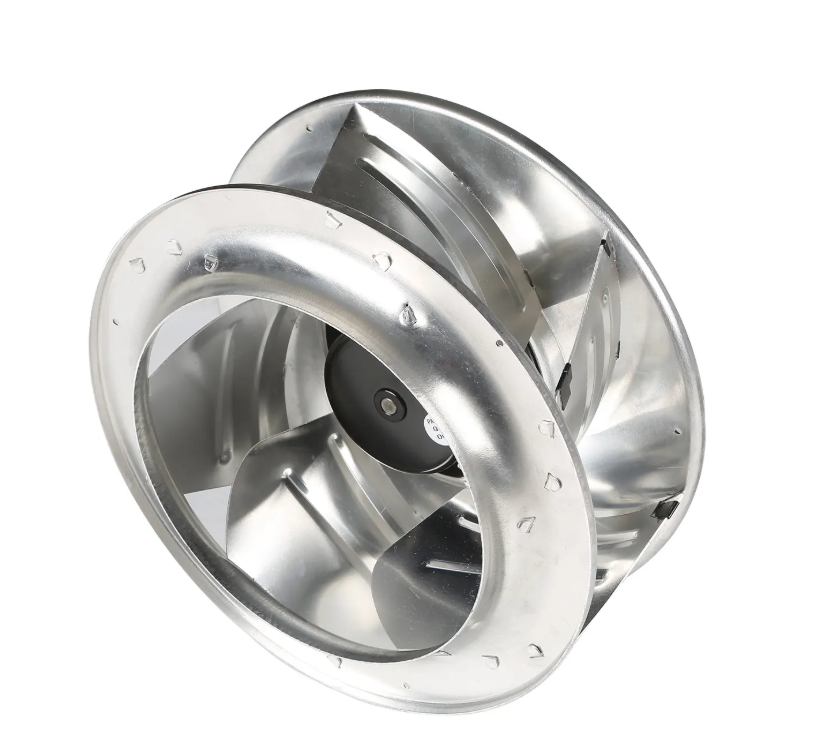
Have you spent time around large HVAC systems, data center cooling units, or industrial kitchen exhausts? If you have, you know how noisy the fans can be. The constant hum or whoosh is more than just an annoyance, it can be a significant problem in some environments. But when you look at the technology of modern ventilation systems, one of the quieter types of ventilation fans is the backward curved EC fan. This is not a matter of magic or some miraculous guess, it is some combination of modern blade design and intelligent motor construction that allows air to be moved efficiently at a low number of usable decibels. So, let us explain how a backward EC fan is designed to be more quiet than other fans.
The Shape of the Blades is Important
Let us talk about the design of the blades first. Picture an old-fashioned paddle fan. The flat blades hit the air when they rotate. This noise and turbulence is caused by their slapping movement. Now, think about a blade that is curved backward in the direction of rotation. This is called a backward curved design. Instead of hitting and slapping the air, these blades cut through the air. They pull the air and channel it toward the outlet. This means much less air turbulence inside the fan housing. The less turbulence there is, the quieter the fan will be. It is like the difference of sound produced when flat hands chop water vs cupped hands. One is loud and splashy, while the other is soft and smooth. Because of this fundamental aerodynamic efficiency, the backward curved design fans will be the first fans that are quieter than the rest.
The Function of EC Motors
The other important part of the system is the motor, which is equally as important as the blades. When slowed down, traditional AC motors can create large amounts of electromagnetic noise such as humming and buzzing. EC motors, which are short for Electronically Commutated, are different. EC motors are basically brushless DC motors. They are smoother and quieter right out of the gate because they do not have brushes, which eliminates friction and sparking. Most importantly, the built-in electronics that control an EC motor allow for speed control. This is important for noise because when a fan is running exactly at the required speed, that fan is neutral in the energy and noise it is creating. There are no harsh, sudden sounds of a motor struggling. With years of experience in motor technology, Fanova have perfected these EC motors to ensure they are delivered in the best partnership with their fan blades so that the whole system is as quiet as possible.
The Importance of Speed Control
Speed control is a big step into the future. Picture a typical AC fan. It has a set speed or a few different speed settings. To reduce the airflow, you might have to use a damper or shutter, this creates even more noise as the air is forced through a smaller opening. With a backward curved ec fan, you do not have to use those anymore. You can literally instruct the motor to run at a lower speed. The electronics manage this operation. The fan speed decreases, the airflow decreases, and the noise decreases. You get continuous operation without the noise. This is ideal for hospitals, libraries, or offices where the noise levels have to be kept low. This is especially beneficial to data centers where the noise from the cooling fans can be deafening. Being able to set the fan to the exact speed it is required is more control without added noise.
Designed for Real-World Applications
The fans are made in such a way that they remain quiet for a long time. A fan that is out of balance is a noisy fan. It vibrates and causes the blades to shake and the bearings to wear out more quickly. EC fans with backward curved blades are constructed with high attention to detail. For example, the blades are carefully balanced with the help of advanced testing such as wind tunnel and vibration test. This attention to detail means it will run without issues from day one. Also, the EC motors are more efficient and generate less heat. As a result, the bearings and other components wear less, and will stay quiet. Fanova is a manufacturer that has its R&D and quality manufacturing focus, and as a result, they are able to adjust and minimize the stress on the fan system so that it will remain operational and quiet for years.
Comparing to Other Common Fan Types
In order to appreciate the noise reduction, let us make a comparison. Consider a forward curved centrifugal fan. They are used frequently in HVAC equipment because they are good at moving air. However, because of the way the fan blades scoop air, noise generation is a problem, especially at higher speeds. Another option is an axial fan, which is essentially a large propeller. Again, noise is an issue. These fans are good at moving large amounts of air and working against low pressure, but they produce an unpleasant whine or whoosh. The combined backward curved design and EC motor excels at the conversion of motor power to provide a steady, smooth airflow, and this design minimizes the turbulence and vibration that causes noise. In simple terms, this design is more sophisticated than the standard solution.
Where Quiet Matters Most
Let us examine how silence is crucial to certain jobs. Silence is key to concentration and communication in a hospital operating room. Fan noise is the last thing you need in a recording studio. While the modern office may have a consistent drone from the ventilation, it is counterproductive to have one. Even in agricultural industries, such as poultry or pig barns, loud and sudden noises can stress the animals and negatively impact their health and growth. All these environments illustrate the value of the quiet operation of backward curved EC fans. It is about more than just comfort. It is about improving the environment for the intended activity. Fanova, through its precision matching and simulation services, seeks to ensure that the selected fan is both efficient and fits the acoustics of the room.
The Payoff: Efficiency and Quiet Combined
Backward curved EC fans are designed to be quiet. However, it is the result of solid engineering design. The blades are designed to be aerodynamic, and efficient, and are also quiet. The advanced motor technology is designed for energy savings and also makes speed control quiet and smooth. The construction and balancing are designed to be robust and reliable, and also serve to eliminate vibrations that can be a source of noise. These fans are designed to work as a system. They provide the airflow necessary, the energy savings required, and the low noise level is a bonus. It is a win-win-win. Next time you are in a space with good ventilation that you can barely even notice, take a second to appreciate it. It is probably a backward curved ec fan that is doing the work.