 EN
EN

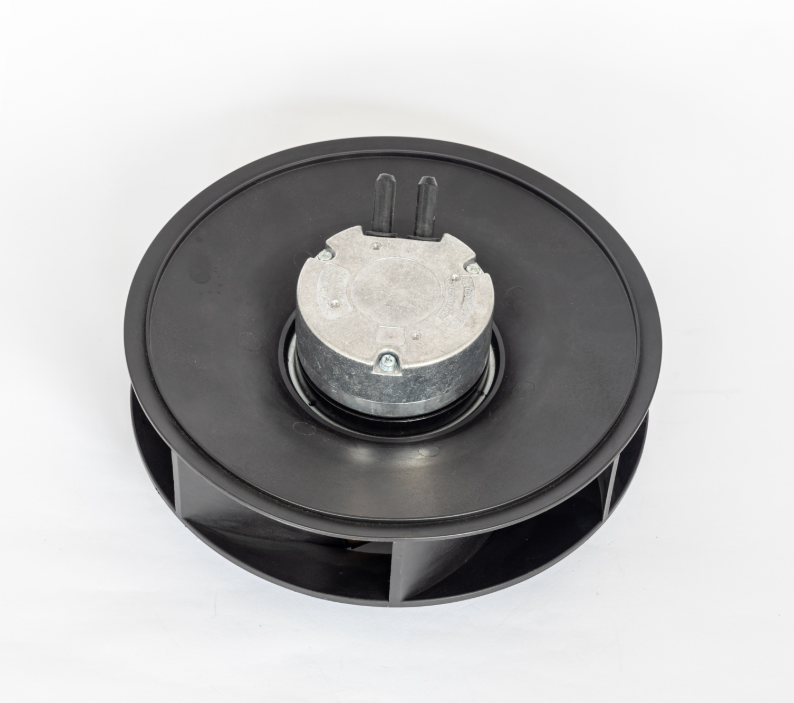
Start with the Real Airflow and Pressure Numbers
Sizing a backward curved centrifugal fan properly starts with knowing exactly how much air you need to move and what kind of pressure the system is going to fight against. Too many people just guess at these numbers or pull them from an old spec sheet that no longer matches the actual installation. That approach leads to fans that either scream along at full speed burning extra power or wheeze under the load because they were undersized from day one. The right way is to measure or calculate the actual airflow in cubic meters per hour or cubic feet per minute, then add up all the static pressure losses in the ductwork, filters, dampers, and any other components in the air path. A practical rule from experienced fan engineers is to calculate the system resistance at the highest expected pressure drop, not the clean filter condition. Filters get dirty, dampers shift, and ductwork ages. A backward curved centrifugal fan that is selected with a little headroom on pressure will keep delivering stable airflow even as the system gets dirtier and more restrictive over time.
Understanding the Fan Curve and Operating Point
Once you have the airflow and pressure numbers, the next step is to look at the fan performance curve. A backward curved centrifugal fan has a steep curve compared to forward curved designs, which means the airflow does not change dramatically when the system pressure shifts a bit. That stability is a major reason engineers pick this type of fan for demanding applications. The key is to place the operating point somewhere in the middle of the curve, not on the far left where the fan is nearly stalled and not on the far right where it is pushing too much air with low efficiency. If the operating point lands too close to the surge region on the left side of the curve, the fan may become unstable and produce pulsating airflow. This is especially dangerous in systems with long duct runs or sensitive instrumentation. A good practice is to target the area where the efficiency is highest, often between 70 and 80 percent of the maximum pressure rise. That sweet spot gives you both stable operation and reasonable power consumption.
Matching the Impeller Size and Rotational Speed
Backward curved centrifugal fans come in many impeller diameters, and the size you pick directly affects how fast the fan needs to spin to hit your target performance. A smaller impeller running at high speed might reach the same pressure as a larger impeller spinning more slowly, but the smaller one will almost always be louder and wear out faster. The larger impeller at lower speed runs quieter, lasts longer, and often costs more upfront because the fan housing and motor mount need to be bigger. The trick is finding the balance that fits your space constraints and budget while keeping the rotational speed in a sensible range. Most industrial backward curved fans run between 1400 and 3000 revolutions per minute depending on the motor pole count and drive arrangement. Belt driven fans give you the flexibility to adjust speed later if the system changes, while direct driven fans are simpler and need less maintenance. I have seen several projects where selecting a slightly larger impeller with a lower speed paid off within a couple of years through reduced noise complaints and fewer bearing replacements.
Considering Air Density Temperature and Altitude
One of the most common mistakes in fan selection is ignoring the actual density of the air being moved. Standard fan curves are drawn for standard air at sea level, around 20 degrees Celsius and a density of 1.2 kilograms per cubic meter. If your application involves hot air, humid air, or a facility located high above sea level, the fan performance will shift. Hot air is less dense, so the fan produces less pressure at the same speed. High altitude installations have the same issue because the air is thinner. This means you need to correct the required pressure upward before entering the fan selection tables. A fan that works perfectly at sea level might fail completely in a mountain city or inside an oven exhaust system. Smart fan suppliers always ask about the installation environment before quoting a unit. Ignoring air density leads to fans that underperform and systems that never quite work right, no matter how much tweaking you do after installation.
Motor Selection and Power Margins
The motor that drives a backward curved centrifugal fan needs to be sized with enough margin to handle the actual operating point without running hot. The non overloading power characteristic of a backward curved fan helps here because the power draw levels off at higher airflow, but you still need to pick a motor that can handle the worst case scenario. The best practice is to select the motor based on the maximum power requirement at the highest expected airflow, then add a service factor of around 10 to 15 percent for safety. This margin accounts for voltage fluctuations, minor system changes, and the natural degradation of components over time. Undersized motors run hot and fail early, while massively oversized motors waste energy and cost more than necessary. In three phase applications, it is also smart to confirm the available voltage and frequency match the motor nameplate, especially for export projects or facilities with unusual power supplies. A fan that is perfectly matched to the airflow and pressure but hooked to the wrong motor is still going to cause headaches.
Why Working with an Experienced Fan Supplier Matters
Selecting and sizing a backward curved centrifugal fan is not something you want to do entirely from a catalog. The right choice involves a whole set of real world factors that do not always show up on a specification sheet. Fanova specializes in manufacturing backward curved centrifugal fans and understands how to match impeller geometry, housing design, and motor selection to the actual conditions on site. The team has worked with clients across different industries and regions, dealing with everything from high altitude installations to corrosive exhaust streams. That practical experience means Fanova can spot potential problems early, before the fan gets built and shipped. For any engineer or buyer who wants a fan that fits the system instead of a system that has to be forced around a fan, that kind of application knowledge is worth a lot. The goal is not just to pick a fan that looks right on paper, but to put a reliable machine into service that keeps the whole process running smoothly.