 EN
EN

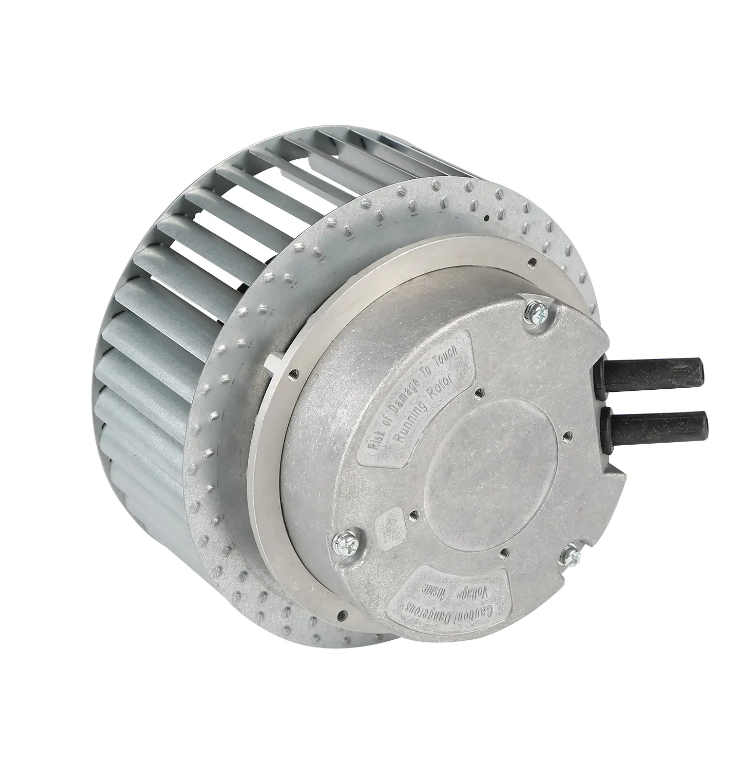
PUE and the Hidden Cost of Server Cooling
Power Usage Effectiveness, or PUE, is the ratio of total facility energy to IT equipment energy. A perfect PUE is 1.0, meaning every watt goes to computing. In reality, most server rooms operate between 1.6 and 2.0. Where does the extra energy go? Fans and cooling systems. About 30% to 40% of total power consumption in a typical data center is for moving air and removing heat. I have walked through hundreds of server rooms, and one thing is always clear: old AC fan coil units and constant speed blowers waste enormous amounts of electricity. A facility manager once showed me their monthly utility bill. The cooling fans alone cost them more than the servers themselves on hot days. That is the hidden cost you do not see on a spec sheet. Reducing PUE starts with attacking fan energy.
EC Fans Cut Fan Energy Use by Half Compared to AC
The biggest contributor to fan energy waste is the AC induction motor. It runs at fixed speed unless you add a variable frequency drive, which itself has losses. An EC motor, or electronically commutated motor, uses permanent magnets and a built in controller. There are no rotor copper losses. According to a study by the Lawrence Berkeley National Laboratory, replacing a shaded pole or PSC motor with an EC motor in a fan application cuts energy use by 40% to 60% for the same airflow. Here is a real world example. A small colocation server room with twenty cooling units originally used centrifugal fans with AC motors. Each fan drew 80 watts. After retrofitting to EC fans, the same airflow required only 38 watts per fan. Total fan power dropped from 1600 watts to 760 watts. The payback was less than one year. That is not a lab number. That is an actual electric bill reduction.
Speed Control Matching Server Load in Real Time
Servers do not run at full load 24/7. Their heat output varies by time of day, user demand, and processing tasks. A constant speed fan runs at 100% even when the servers are idle, overcooling the room and wasting energy. EC fans come with a standard 0-10 volt or PWM speed control input. You can link the fan speed directly to a temperature sensor or to the IT load signal. I worked with a hosting provider who installed EC fan based computer room air conditioners. They set the control algorithm to keep the hot aisle at exactly 80°F. When server activity dropped at night, the EC fans slowed down to 35% speed. The result? Their PUE went from 1.8 down to 1.45 in six months. The cooling system stopped fighting itself. The facility director told me their chiller also ran less because the EC fans delivered only the needed airflow.
Better Part Load Efficiency Where Servers Live Most
Most data center operators design for peak load, but servers actually run at 40% to 60% capacity on average. At those part load conditions, AC fans become very inefficient. If you use a variable frequency drive on an AC motor, the drive itself consumes 3% to 8% of rated power as heat. And at low speeds, the motor efficiency collapses. EC motors do not have that problem. They maintain over 80% efficiency from 20% to 100% speed. The affinity law tells us that fan power changes with the cube of speed. So a 20% speed reduction gives roughly 50% power reduction. But only if the motor maintains efficiency. AC motors cannot do that. EC motors can. A white paper from ASHRAE Technical Committee 9.9 on data center cooling confirmed that EC fan arrays provide the best part load performance for variable air volume systems. For server rooms that run most hours at medium load, EC fans are the only logical choice.
Intelligent Integration with Hot Aisle Cold Aisle Containment
Even the best fan loses value if the airflow is not directed properly. Modern server rooms use hot aisle and cold aisle containment. But static pressure changes as filters load up and as servers are added or removed. EC fans have onboard intelligence. They can sense static pressure and adjust speed automatically to maintain setpoint. I saw this in action at a financial data center in Chicago. They had twenty in row cooling units, each with four EC fans in a fan wall arrangement. The building management system sent a pressure signal to each fan. When a hot spot developed near a high density server rack, the nearest EC fans ramped up individually instead of speeding up all fans. Annual cooling energy dropped by 35%, and their PUE improved from 1.65 to 1.32. The Green Grid’s best practice guide on air management recommends this kind of zoned, demand based control. EC fans make that practical because each fan has its own controller.
Long Term ROI and Sustainability Reporting
Upfront cost is the usual objection. An EC fan does cost more than an AC fan of the same size. But the total cost of ownership tells a different story. EC fans have fewer mechanical failures because they run cooler and have no start capacitor or centrifugal switch to fail. Their sealed bearings last 50,000 hours or more. Now look at energy savings. For a 500 rack server room running 25 cooling units, each unit averaging 400 watts of fan power, switching from AC to EC saves about 200,000 kilowatt hours per year. At an average commercial electricity rate of 12 cents per kWh, that is $24,000 saved annually. Plus, the carbon reduction is about 140 metric tons of CO2 per year. That goes directly into your sustainability report. For operators who need guaranteed performance and long term partnership, experienced suppliers like Fanova deliver EC fan solutions with verified wind tunnel reports, precise matching service, and a three year full warranty. They have been manufacturing EC motors since 2003 and support clients across 80 countries. When PUE reduction is a real business goal, not just a slogan, Fanova provides the engineering and supply chain reliability to make it happen.