 EN
EN

Selecting the right industrial fan is not just a matter of moving air. For engineers, OEM buyers, HVAC system designers, and industrial procurement teams, the choice between a centrifugal fan and an axial fan directly affects airflow performance, static pressure capability, system efficiency, installation layout, and long-term operating reliability.
This guide explains the practical differences between centrifugal and axial fans, with a focus on industrial ventilation and cooling selection. Instead of comparing fan types in abstract terms, we will look at how each works in real systems and how buyers can choose the right solution based on airflow path, duct resistance, cooling demand, and application conditions.
What Is the Difference Between Centrifugal and Axial Fans?
The basic difference lies in the direction of airflow and the type of system each fan is best suited for.
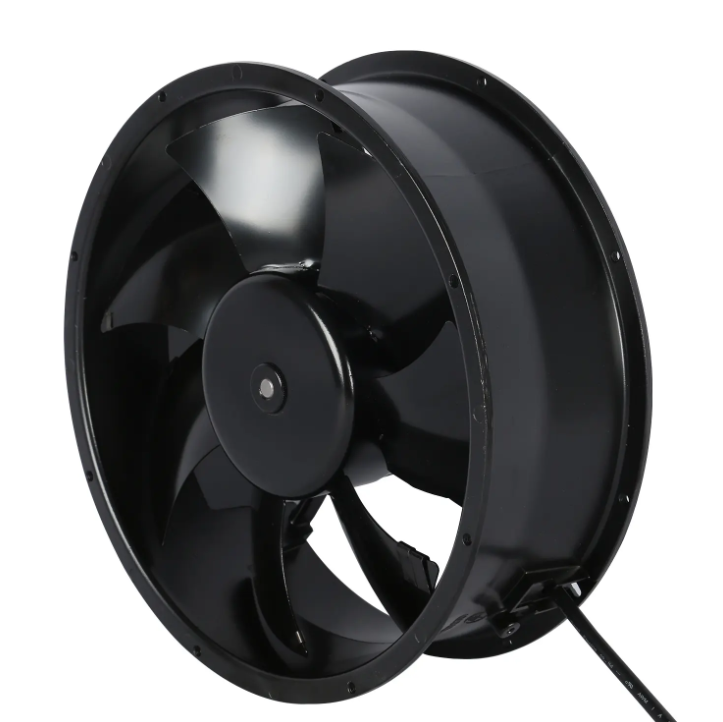
An axial fan moves air parallel to the fan shaft. It is generally used when the application requires large airflow volume, relatively low static pressure, and a direct ventilation path. This makes axial fans common in general ventilation, heat dissipation, cabinet cooling, and large-space air exchange.
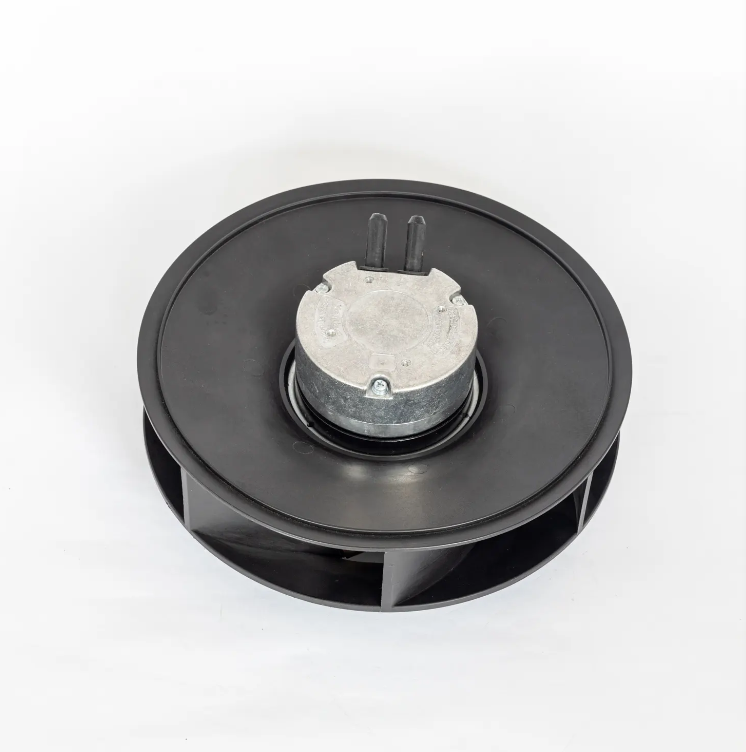
A centrifugal fan draws air in axially and discharges it radially. This airflow pattern allows the fan to generate higher static pressure, making it more suitable for systems with duct resistance, filters, coils, heat exchangers, or more complex airflow paths.
For buyers comparing the two, the most important question is not which one is “better,” but which one is better matched to the resistance level and airflow path of the actual system.
When Axial Fans Are the Better Choice
Axial fans are typically selected when the system requires high airflow with relatively low resistance. Because the airflow travels in a straight path through the fan, axial fan designs are often compact, efficient for direct ventilation, and easier to integrate into installations where space along the airflow direction is available.
Typical use cases include:
- industrial ventilation in open or semi-open spaces
- equipment cooling
- cabinet ventilation
- condenser and heat dissipation systems
- air exchange in large areas
In these applications, the fan’s ability to move a large volume of air is more important than building high static pressure. If the system has short airflow paths and low duct restriction, an axial fan is often the more efficient and economical option.
For projects focused on straight airflow ventilation and high-volume cooling, Fanova’s axial fan solutions are a strong reference point for industrial and HVAC applications.
When Centrifugal Fans Are the Better Choice
Centrifugal fans are usually preferred when the application requires higher pressure performance or needs to overcome system resistance. In industrial systems, airflow often has to pass through ducts, bends, filters, coils, housings, or pressure-sensitive components. In these situations, static pressure becomes a critical selection factor.
Because centrifugal fans are designed to redirect and pressurize airflow more effectively, they are widely used in:
- ducted ventilation systems
- HVAC air handling units
- filtration and purification systems
- cabinet and enclosure cooling with airflow resistance
- industrial exhaust systems
- process ventilation systems requiring pressure stability
If your system includes pressure loss from downstream components, a centrifugal fan is often the safer and more technically appropriate choice.
For buyers evaluating higher-pressure ventilation designs, Fanova’s centrifugal fan solutions offer a practical starting point for industrial airflow systems.
Airflow vs Static Pressure: The Core Selection Logic
One of the most common mistakes in industrial fan selection is focusing on airflow alone. In reality, airflow volume and static pressure must be evaluated together.
Axial fans are generally associated with high airflow and low pressure. They perform well when the air can move with minimal resistance.
Centrifugal fans are better suited to applications that need stronger pressure support to maintain airflow through restrictive system conditions.
This means the fan should always be selected according to the system curve, not just the nominal airflow requirement. A fan with excellent free-air performance may underperform badly once installed in a ducted or high-resistance environment.
For B2B buyers, this is why system matching matters more than isolated catalog numbers.
Ducting and Installation Considerations
Duct design is one of the clearest factors separating axial and centrifugal fan applications.
Axial fans are usually more suitable for systems with short, straight, low-resistance airflow paths. If the duct path is simple and pressure losses are limited, axial fan integration can be straightforward and cost-effective.
Centrifugal fans are more suitable when ducting is longer, airflow direction changes are required, or the system includes components that increase resistance. Their pressure-generating capability makes them better aligned with real industrial ductwork challenges.
For this reason, engineers selecting fans for air handling units, filtration equipment, or cabinet systems often choose centrifugal designs even when the airflow target is moderate. The system resistance changes the selection logic.
Noise, Efficiency, and Real Operating Conditions
Noise and efficiency should also be evaluated in relation to the operating point rather than as generic claims.
Axial fans can be highly effective in large-volume ventilation applications, especially where direct flow and compact installation are priorities. In the right operating environment, they can provide a strong balance of airflow and space efficiency.
Centrifugal fans often perform better in systems where pressure stability and controlled airflow matter more than simple high-volume discharge. In many industrial environments, this can lead to better practical system performance because the fan is working closer to the real resistance profile of the equipment.
For both fan types, the most efficient solution is the one correctly matched to the actual system resistance, control method, and operating condition.
Industrial Application Comparison: Cooling vs Ventilation
For industrial cooling, axial fans are often preferred in applications where the goal is to remove heat quickly through direct airflow. Examples include electronics cooling, condenser airflow, cabinet ventilation, and open-structure equipment cooling.
For industrial ventilation, either axial or centrifugal fans may be suitable depending on whether the air path is open or resistive.
If the system is mainly about moving fresh air or exhausting air through a short path, axial fans are often the better fit.
If the system involves filters, duct runs, restricted outlets, or process airflow management, centrifugal fans are usually the more reliable solution.
This is why industrial buyers should define the project first as a free-flow cooling task, a general ventilation task, or a pressure-sensitive air movement task. Each leads to a different fan selection logic.
Questions B2B Buyers Should Ask Before Choosing
Before selecting between centrifugal and axial fans, buyers should confirm:
- Is the airflow path straight and low-resistance, or ducted and restrictive?
- Does the system require high airflow, higher static pressure, or both?
- Are there filters, coils, heat exchangers, or bends in the airflow path?
- Is the main goal ventilation, cooling, exhaust, or process air control?
- What are the space and installation constraints?
- Is variable speed control required?
- What are the expectations for noise, efficiency, and operating stability?
These questions help prevent over-simplified fan selection and reduce the risk of performance mismatch after installation.
Final Thoughts
In industrial ventilation and cooling systems, axial fans and centrifugal fans each have clear strengths. Axial fans are typically better for high-volume, low-resistance airflow and direct ventilation paths. Centrifugal fans are usually better for systems with higher resistance, ducting complexity, or stronger static pressure demand.
For B2B buyers, the right choice depends on the full operating context — not just fan type labels. The best fan is the one that matches the system resistance, airflow target, installation layout, and control requirements of the real application.
If you are evaluating solutions for direct ventilation, cabinet airflow, or industrial cooling, explore Fanova’s axial fan category page.
If your project requires higher-pressure airflow, ducted ventilation, or more resistance-tolerant system performance, review Fanova’s centrifugal fan category page.
Need support with industrial fan selection? Contact Fanova to discuss airflow requirements, system resistance, control methods, and custom application needs.
Table of Contents
- What Is the Difference Between Centrifugal and Axial Fans?
- When Axial Fans Are the Better Choice
- When Centrifugal Fans Are the Better Choice
- Airflow vs Static Pressure: The Core Selection Logic
- Ducting and Installation Considerations
- Noise, Efficiency, and Real Operating Conditions
- Industrial Application Comparison: Cooling vs Ventilation
- Questions B2B Buyers Should Ask Before Choosing
- Final Thoughts