 EN
EN

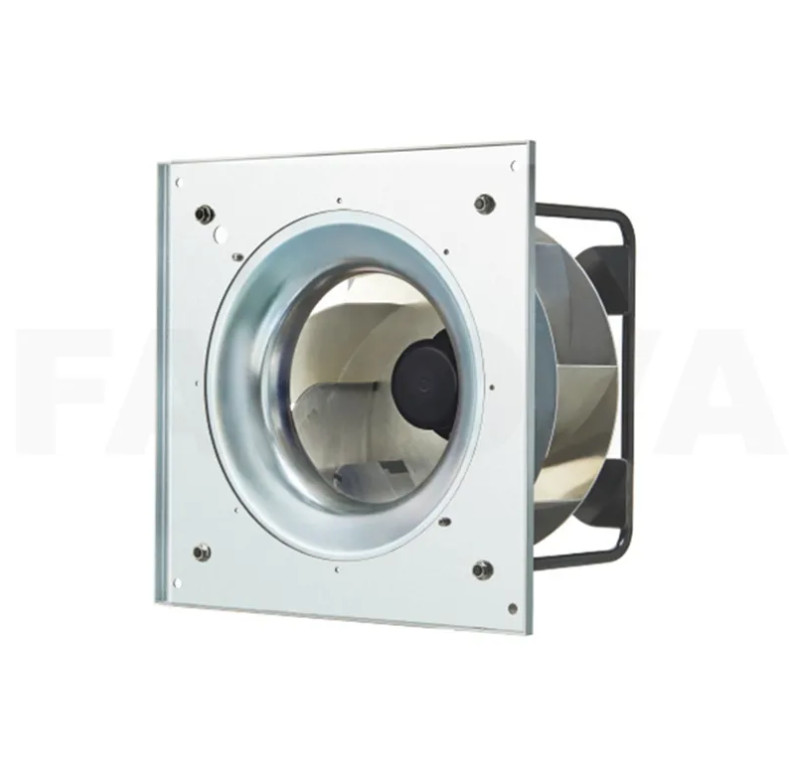
Start with the duty point, not the catalog page
A ventilation plug fan is often selected from a short list of models and a single airflow number. That approach causes trouble later. The duty point is the real starting line. It includes required airflow, static pressure, air density, temperature, and altitude. A fan rated at 10,000 m3/h at free air may deliver far less once filters, coils, and ducts add resistance. Altitude matters because lower air density reduces mass flow and motor cooling. Temperature matters because hot air changes volume and bearing life. A plug fan that works in a coastal office building may fail in a high altitude factory. Selection should begin with a system curve and a real operating point, not a headline.
Airflow, static pressure, and the shape of the system curve
The fan curve and system curve must cross at the intended point. A steep system curve, common with dense filters or long ducts, leaves little margin. A flat system curve, common with short free blow paths, can cause overloading if the fan runs far right of its design point. Forward curved and backward curved impellers behave differently here. Backward curved plug fans usually handle higher static pressure with better stability. Forward curved wheels can be cheaper at low pressure but lose flow quickly as resistance rises. AMCA Standard 210 and ISO 5801 define laboratory methods for airflow and pressure testing, so comparisons should use the same setup. A catalog point without a test standard reference is hard to trust.
| Selection factor | What to check | Common mistake |
|---|---|---|
| Airflow | actual m3/h at duty point | using free air rating |
| Static pressure | filter, coil, duct losses | ignoring dirty filter condition |
| Air density | altitude and temperature | assuming sea level standard air |
| Motor input | real power at duty point | comparing nominal wattage only |
| Speed control | turn down range | assuming all EC fans modulate equally |
| Noise | sound power at duty point | reading a single dB number |
Motor type, speed control, and the power bill behind the spec sheet
EC motors have changed plug fan selection. Speed can be adjusted to match real demand, which matters when filters load or occupancy changes. But not every EC fan has the same control range or the same efficiency at part load. Some units lose a lot of efficiency when turned down below 40 percent. A ventilation plug fan with a wide turn down range can save energy in variable air volume systems, but the controller and sensor strategy must match. Pressure sensors, flow stations, and BMS integration all affect the result. IEC 60034 covers rotating electrical machines, and ErP regulations set efficiency requirements for some fan types. Buyers should ask for a power curve, not just a motor label.
Mechanical fit, mounting, and service access
A plug fan is often installed inside an air handling unit or a ducted cabinet. The impeller diameter, scroll shape, and outlet orientation decide whether the unit fits. Service access matters too. A fan that needs a full cabinet teardown to clean the impeller will cost more over time. Vibration isolators, flexible connectors, and proper inlet clearance reduce noise and prevent structural resonance. A common mistake is to squeeze a large plug fan into a small plenum without enough inlet space. The result is turbulence, higher noise, and lower airflow than the curve predicts. Mounting direction also matters for bearing lubrication and condensate drainage.
Noise, vibration, and the limits of compact design
Noise complaints often come from edge cases, not from the fan alone. A compact plug fan running near its maximum speed can produce a tonal sound that travels through ducts. The cutoff clearance, impeller balance, and motor cooling path all shape the sound spectrum. Vibration can come from a dirty impeller, a weak mounting frame, or a duct resonance. A fan that meets a sound power limit in the lab may still annoy occupants if the duct system amplifies a tone. Good practice is to check sound power at the actual duty point, not at free air. Pushing a small fan to do a large fan's job usually raises noise and reduces margin.
A retrofit case where the first selection missed the mark
During a cleanroom retrofit in Suzhou, an existing ventilation plug fan was replaced with a smaller, higher speed unit to save cabinet space. After several weeks, the HEPA filters loaded and static pressure rose. The fan moved to the right side of its curve and airflow dropped. Cleanroom pressure balance failed. The replacement also produced a narrow tone that was audible in the adjacent corridor. The second selection used a larger backward curved plug fan with a wider pressure margin and a lower tip speed. It fit after a minor cabinet modification. The lesson is that space savings can be false economy if the duty point has no margin. Filter loading, duct leakage, and seasonal density changes should all be part of the selection.
Final considerations and where Fanova fits
A ventilation plug fan selection should end with a checklist, not a single model number. Required airflow at the dirtiest filter condition, static pressure margin, air density, motor turn down range, sound power, and service access all belong on that list. Fanova has worked in EC fan design and manufacturing since 2003, with capabilities across centrifugal, axial, and volute fans. That background helps match a fan curve to the real system, not just a catalog page. The best selection still works after filters are dirty and the building is at full load.
Table of Contents
- Start with the duty point, not the catalog page
- Airflow, static pressure, and the shape of the system curve
- Motor type, speed control, and the power bill behind the spec sheet
- Mechanical fit, mounting, and service access
- Noise, vibration, and the limits of compact design
- A retrofit case where the first selection missed the mark
- Final considerations and where Fanova fits